
700 – 767
St. Paul I
Brother and heir of Stephen II's policy
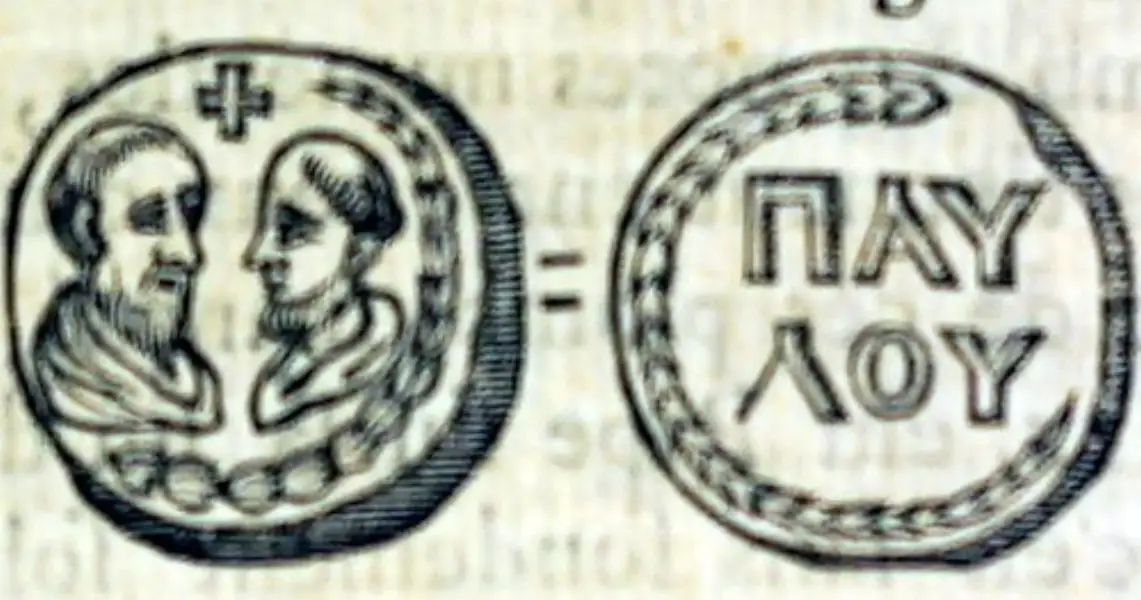
Overview
Paul I was bishop of Rome and ruler of the still-emerging Papal States from 29 May 757 down to his death on 28 June 767. Born at Rome around the year 700, he belonged to an aristocratic Roman house and was educated for the priesthood at the Lateran Palace alongside his elder brother Stephen, who became pope in 752. As a deacon of the Roman church Paul served as his brother's trusted negotiator in the delicate dealings with the Lombard kings, and when Stephen died on 26 April 757 the majority of the electors chose Paul precisely to continue his brother's policy, defeating a faction that favoured the archdeacon Theophylact. His decade as pope was dominated by three powers: the Lombards, the Franks, and the distant emperor at Constantinople. The Lombard king Desiderius held cities the papacy claimed — Imola, Osimo, Bologna, and Ancona — and in 758 seized the duchies of Spoleto and Benevento; on a visit to Rome he pressured Paul into writing to Pepin the Short on the Lombards' behalf, though the Frankish king kept to his Roman alliance and later acted as arbiter between the rival claims. From the East Paul lived under the shadow of a possible Byzantine attack, feared most keenly in 759. In 765 papal privileges were restored in Benevento, Tuscany, and part of Spoleto. He died at Rome in the summer of 767 and is honoured among the early saints of the Roman see.
The Complete Life
Two Brothers of the Lateran
Paul was born at Rome around the year 700, when the old imperial city belonged in name to the Eastern Roman Empire but lived in practice under the rule of its own church and nobility. He came of an aristocratic Roman house and, with his elder brother Stephen, was educated for the priesthood within the Lateran Palace, the cathedral school and administrative heart of the Roman church. The two brothers rose together in its service: Stephen attained the highest office first, elected pope in 752 in the years when the popes were struggling to free Italy from Lombard domination, while Paul served as a deacon of the Roman church. Stephen found in his brother a negotiator he could trust. Paul was repeatedly employed in the delicate and dangerous business of treating with the Lombard kings, whose armies ringed Rome and whose promises shifted with the seasons. Those years of diplomacy formed the future pope: he knew the Lombard court, the Frankish alliance that shielded the papacy, and the exacting politics of Italy better, perhaps, than any other man in the city. When Stephen II died on 26 April 757, the choice of a successor therefore turned on a simple question — who would carry on the dead pope's policy — and for the majority of the Roman electors the answer was already standing in the Lateran.
§ Rise
Chosen to Continue the Policy
The election of May 757 was contested. One faction in Rome favoured Archdeacon Theophylact, a man of standing in the Roman church, and for a moment the succession hung in the balance. Paul prevailed, chosen by a majority that wished for a continuation of his brother Stephen's policy rather than a new direction, and on 29 May 757 he was raised to the see of Rome as its ruler in a decisive hour. The papacy he inherited was no mere spiritual office: Stephen II's negotiations with Pepin the Short had brought the Frankish king into Italy, shattered the Lombard hold, and created the duchies and territories that were hardening into the Papal States. Paul was the first pope to govern that emerging principality from its throne, and he understood from the start that its survival depended on the Frankish alliance remaining intact. His first diplomatic act set the tone for the decade: he wrote to Pepin urging that the friendship between the Franks and the Roman see be maintained unimpaired. It was a realistic vocation for a realist — a churchman elected not for brilliance but for continuity, charged with defending a fragile patrimony against the Lombard king Desiderius, the intrigues of Constantinople, and the ever-present danger that the Franks might tire of their Italian commitments.
§ Rise
Between Lombard, Frank, and Greek
Paul's ten years on the throne of Peter were a long negotiation for survival. The Lombard king Desiderius held Imola, Osimo, Bologna, and Ancona — cities the papacy claimed as its own — and in 758 he marched south to crush a revolt in Benevento and seized both the duchies of Spoleto and Benevento for himself. Returning from that campaign, Desiderius visited Rome and compelled the pope to write to Pepin asking the Franks to concede all the Lombard claims; the king promised to restore Imola, but only on condition that Paul persuade Pepin to return the Lombard hostages whom the Franks held. Paul complied and sent the letter, yet the manoeuvre came to little: Pepin judged it wiser to stay on good terms with Desiderius, and the pope apparently accomplished nothing by the compelled diplomacy. Later, however, the Frankish king gave the pope genuine support and arbitrated between the Roman and Lombard claims, and in 765 the balance visibly improved, with papal privileges back in force throughout Benevento and Tuscany, and in part of Spoleto. From the other flank came a quieter menace. The estrangement between Rome and the Eastern Roman Empire deepened, and on several occasions — above all in 759 — Paul feared the emperor would send an army against the city. Courtiers at Constantinople even tried to bend Frankish policy toward the Lombards, but Pepin held to his original line, and Rome outlasted the danger.
§ Pontificate
The Quiet End of a Watchful Reign
The sources preserve few details of Paul's last years, but their character is clear from the whole course of his reign: a pontificate of endurance rather than spectacle, guarded against the Lombard on one frontier and the Greek on the other. The Byzantine danger that had gathered in 759 never broke upon Rome — the emperor's projected blow fell or faded as Frankish steadfastness held the Italians in check — and the restoration of papal privileges in Benevento, Tuscany, and part of Spoleto in 765 gave the aging pope at least one solid gain after years of losses and stalemate. He had governed the emerging Papal States for a full decade, the first ruler of a principality that his brother's courage and Pepin's sword had called into being, and he handed on its sovereignty unbroken to his successor. Paul died at Rome on 28 June 767, aged about sixty-six or sixty-seven. The death opened one of the most turbulent successions of the century, as factions fought over the papal throne in the years that followed, but the saintly memory of the man himself outlasted the disorder. Among the early bishops of Rome he is honoured as a saint from the Church's ancient, pre-congregation practice, numbered in the long line of pontiffs whom East and West alike revere.
§ Pontificate
Timeline
- 700
Born at Rome, then under the Eastern Roman Empire
§ Rise
- 752
His brother Stephen is raised to the papacy as Stephen II
§ Rise
- 26 Apr 757
Pope Stephen II dies at Rome
§ Rise
- 29 May 757
Chosen pope over the faction of Archdeacon Theophylact, to continue his brother's policy
§ Rise
- 758
Lombard king Desiderius seizes the duchies of Spoleto and Benevento
§ Pontificate
- 759
Fears that the Eastern Roman emperor will send an army against Rome reach their height
§ Pontificate
- 765
Papal privileges return in Benevento and Tuscany, and in part of Spoleto
§ Pontificate
- 28 Jun 767
Dies at Rome after ten years as bishop of the city
§ Pontificate
The Record
- Canonization
- Pre-congregation: venerated as a saint from antiquity among the early popes of Rome
Prayer
Bibliography
Show 4 sources
- McClintock, John; Strong, James. Cyclopaedia of Biblical, Theological, and Ecclesiastical Literature, Vol. VII. Harper, 1882, p. 831.
- Williams, George L. Papal Genealogy. London, 2004.
- "Pope Paul I", Catholic Encyclopedia. New York: Robert Appleton Company.
- "Paul. The name of five popes. Paul I", New International Encyclopedia. 1905.
Profile text adapted from the Wikipedia article, licensed CC BY-SA 4.0.
Pray with this saint every day
Save St. Paul I to your favorites, read the full profile, and get feast-day reminders in the Saints app.
Get the Saints AppFree on the App Store for iPhone and iPad