
died October 235·Feast August 13
St. Pontian
First pope to resign, martyr of Sardinia
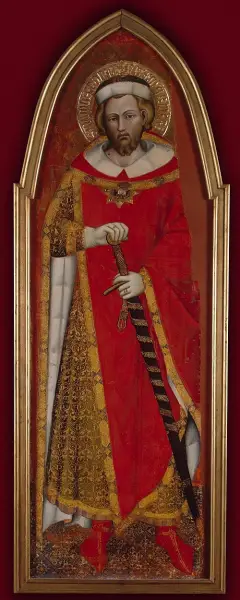
Overview
Pontian governed the see of Rome from 21 July 230 until 28 September 235, and he holds two melancholy distinctions: he was the first pope in history to resign his office, and he died a martyr in the mines of Sardinia. A Roman citizen whose father was named Calpurnius, Pontian led the Roman church through the last peaceful years of the emperor Severus Alexander, presiding over the synod that approved Origen's expulsion and deposition by Demetrius of Alexandria. When Maximinus Thrax overturned his predecessor's tolerance and moved against the Christians, both the pope and his old rival, the antipope Hippolytus, were arrested and shipped to Sardinia to labour in the mines, a sentence generally regarded as a death sentence. Facing it, Pontian resigned on 28 September 235 — the first fully dated event of any papal reign recorded by contemporaries — so that the church of Rome could choose a successor in good order; his abdication ended a schism that had divided the Roman community for eighteen years. Accounts relate that he was beaten to death with sticks only weeks after reaching the island, dying in October 235. The pope Fabian recovered the bodies of Pontian and Hippolytus and buried Pontian in the papal crypt of the Catacomb of Callixtus, where his Greek-inscribed slab, discovered in 1909, bears the word martyr added by another hand.
The Complete Life
A Roman of the Third Century
More is known of Pontian than of the bishops of Rome who came before him, and the little that survives comes through a fourth-century window: a lost papal chronicle, apparently available to the compiler of the Liberian Catalogue, preserved the outlines of his career. The Liber Pontificalis records that he was a Roman citizen, born of a father named Calpurnius, a detail that places him among the freeborn families of the capital in an age when many Christians were slaves or freedmen. He grew to manhood in the church of a city that had lately known both the terror of Decius's predecessors' times and the long peace of the Severan dynasty, and by the summer of 230 he stood at its head, elected bishop of Rome on 21 July to succeed Urban I. The early church historian Eusebius, whose chronology anchors everything known of the period, reckoned his pontificate at six years — an episcopate that would prove long enough to matter and short enough to end in chains. For the first five of those years the emperor was Severus Alexander, whose policy of tolerance let the Roman community worship, meet, and bury its dead without interference, and under that fragile shelter Pontian exercised the ordinary ministry of a third-century bishop: teaching, reconciling, and presiding over the synods by which the Roman church spoke to the wider Christian world.
§ Life
Shepherd in a Time of Schism
Pontian took up the cathedra of Rome while the church of the city was still wounded from within. A schism that had begun years earlier under his predecessor Callixtus still divided the Roman community, with Hippolytus — learned, stern, and uncompromising — leading a party that accused the official church of laxity in discipline, and the bitterness had now lasted the better part of two decades. History does not record how Pontian contended with his rival across those years, but the synodal evidence shows a bishop engaged with the church's wider affairs: in 230 or 231 he presided over the Roman synod that approved the harsh judgement of Demetrius of Alexandria against Origen, the most brilliant and most controversial theologian of the age, ratifying the teacher's expulsion and deposition. The act placed the Roman see squarely behind episcopal authority against theological celebrity, whatever admiration Origen's genius commanded. It is a snapshot of Pontian's vocation: a administrator of order in a church learning how to govern itself. The peace in which he worked was to prove brief. When Severus Alexander fell in 235 to a military coup and Maximinus Thrax seized the throne, the new emperor overturned the old tolerance at once, and the Christians of Rome, having known a generation of quiet, suddenly faced the machinery of imperial anger with their bishop at its focus.
§ Life
Arrest, Abdication, and the Mines
Maximinus Thrax moved against the church's leadership rather than its crowds: in 235 both Pope Pontian and the antipope Hippolytus were arrested and condemned to exile on Sardinia, sentenced to labour in the island's mines, a punishment contemporaries understood as a death sentence in slow form. What Pontian did next made him unique among the successors of Peter. Seeing that a pope in chains, cut off from Rome by the sea and by the state, could not govern, he resigned the office on 28 September 235 — the first bishop of Rome in history to abdicate — so that the Christians of the city could elect a successor in good order. The Liberian Catalogue preserved the date with unusual care, and it stands as the first complete date of a papal reign ever recorded by contemporaries, a mark of how deeply the act impressed the church's memory. The abdication achieved precisely what Pontian intended: an orderly transition to the new pope Anterus, and the healing of the eighteen-year schism, for the rival lines of bishop and antipope were now both represented on the same prison island, their quarrel dissolved in common suffering. Some accounts say the end came quickly — that within weeks of landing Pontian was beaten to death with sticks. He died in October 235. Hippolytus also did not survive the exile, and tradition cherishes the hope that the two old enemies were reconciled, whether in Rome before their arrest or together on Sardinia.
§ Life
Death in Exile
The last weeks of Pontian's life belong to Sardinia, and almost nothing of them can be known beyond the fact of his death in October 235, within weeks, by some accounts, of his arrival. The mines of the island were the empire's ordinary destination for Christians condemned in the persecutions: the condemned were worked, starved, and beaten, and few lasted a season. The tradition that Pontian was beaten to death with sticks — a detail preserved in the sources behind the martyr acts — fits that world exactly, a public execution by club rather than any legal sentence, and the Greek word martyr inscribed later on his tomb shows how the church of Rome understood the manner of his dying. With him on the island died Hippolytus, the most learned figure of the Roman church and its longest-living dissident, and the two men who had spent years as rivals in the same city passed from it within the same months. The image has consoled Christians ever since: pope and antipope, reconciled or nearing reconciliation, sharing the same harsh roads to the same reward. In Rome the church that Pontian had resigned to protect moved on under Anterus and then Fabian, but it did not forget its exiled bishop, and within a year of his death it sent to recover his body from the island where he had died.
§ Life
The Slab in the Callixtus Crypt
In 236 or 237 the new pope, Fabian, had the remains of both Pontian and Hippolytus fetched back from Sardinia to Rome, an act of pious statesmanship that signalled the reconciliation of the whole divided house: the martyr pope and the martyr antipope returned together to the city they had once contested. Pontian was buried in the papal crypt of the Catacomb of Callixtus on the Appian Way, the burial place of his predecessors, and there he was venerated from antiquity as a saint and martyr, with no formal canonization process ever needed for a death so witnessed. The proof of his cult lay underground for sixteen centuries. In 1909 archaeologists uncovered the slab that covered his tomb, and its Greek inscription — Pontianos Episk, Pontian the bishop — settled beyond dispute the identification of the grave; across it, in a second hand, someone had added the single word Martyr. The Eastern Orthodox Church and the Catholic Church of the 1969 calendar commemorate Pontian and Hippolytus jointly on 13 August, keeping in one feast the reconciliation the two men's common martyrdom sealed, while communities using the 1960 calendar keep Pontian alone on 19 November. A titular church in Rome, San Ponziano, bears his name, and churches in his honour stand at Spoleto, Lucca, and Carbonia in Sardinia, the island of his death.
§ Veneration
The Pope Who Laid Down the Office
Pontian's legacy is unlike that of any legislator or doctor among the popes, for it rests on a single decision and a single death. By resigning on 28 September 235 he established, sixteen centuries before any canon law contemplated it, that the papal office could be laid down for the good of the church — a precedent that quietly stood behind every later discussion of papal resignation and that found its echo when another pope, in quite other circumstances, followed the same path. The date his abdication fixed in the Liberian Catalogue became the first securely dated moment in the whole succession of the bishops of Rome, an anchor for the chronology of the early papacy. His reconciliation with Hippolytus, whose works the church came to honour even as it healed the schism, left the Roman community whole for the generation of Fabian that followed. And his martyrdom, remembered beside Hippolytus on 13 August, joined the two feuding parties of the Roman church in a common cult: the Church that could not decide between bishop and antipope in life learned to venerate them side by side in death. The slab in the Catacomb of Callixtus, with its two hands and two inscriptions — the bishop's name and the martyr's title — remains among the most touching documents of the age of the persecutions, the grave of the man who gave up everything and was found to have kept everything that mattered.
§ Veneration
Timeline
- 21 Jul 230
Becomes bishop of Rome, succeeding Urban I
§ Life
- 231
Presides over the Roman synod that approves Origen's expulsion and deposition by Demetrius of Alexandria, in 230 or 231
§ Life
- 235
Arrested in the persecution of Maximinus Thrax and exiled with the antipope Hippolytus to labour in the mines of Sardinia
§ Life
- 28 Sep 235
Resigns the papacy — the first pope ever to do so — to allow an orderly election and heal the eighteen-year schism
§ Life
- Oct 235
Dies in Sardinia, beaten to death with sticks, weeks after his arrival
§ Life
- 237
Pope Fabian brings the bodies of Pontian and Hippolytus back to Rome and buries Pontian in the papal crypt of the Catacomb of Callixtus, in 236 or 237
§ Veneration
- 1909
The slab covering his tomb is discovered, inscribed in Greek and marked martyr in a second hand
§ Veneration
The Record
- Canonization
- Pre-congregation: martyred in the persecution of Maximinus Thrax and venerated as a saint from antiquity by the Catholic Church and the Eastern Orthodox Church
Prayer
Bibliography
Show 8 sources
- Kirsch, Johann Peter. "Pope St. Pontian", The Catholic Encyclopedia, Vol. 12. New York: Robert Appleton Company, 1911.
- Kelly, J.N.D. The Oxford Dictionary of Popes. Oxford: Oxford University Press, 1986, p. 16. ISBN 978-0-19-213964-1.
- Papandrea, James L. Reading the Early Church Fathers: From the Didache to Nicaea. Paulist Press, 2012. ISBN 978-0809147519.
- Pirlo, Paolo O. "Sts. Pontian & Hippolytus", My First Book of Saints. Sons of Holy Mary Immaculate – Quality Catholic Publications, 1997, pp. 179–180. ISBN 978-971-91595-4-4.
- Clarke, G. W. "Some Victims of the Persecution of Maximinus Thrax", Historia: Zeitschrift für Alte Geschichte, Bd. 15, H. 4 (November 1966), pp. 445–453.
- McBrien, Richard P. Lives of the Popes. San Francisco: Harper Collins, 2000, p. 45.
- Calendarium Romanum. Libreria Editrice Vaticana, 1969, p. 146.
- Rendina, Claudio. Le chiese di Roma. Newton Compton, 2007. ISBN 978-8854109315.
Profile text adapted from the Wikipedia article, licensed CC BY-SA 4.0.
Pray with this saint every day
Save St. Pontian to your favorites, read the full profile, and get feast-day reminders in the Saints app.
Get the Saints AppFree on the App Store for iPhone and iPad