
12 May 254 – 2 August 257·Feast August 2
St. Stephen I
Pope who held the Latin Church against rebaptism
Overview
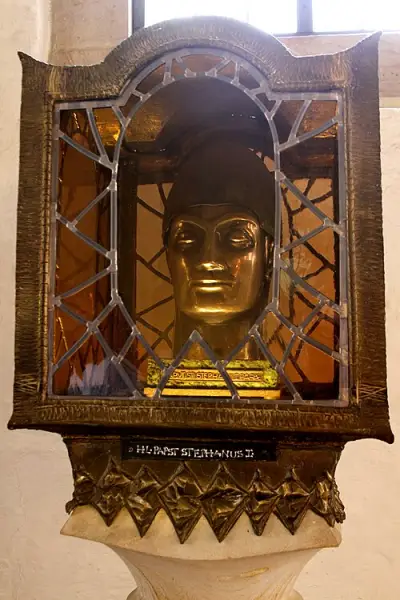
Stephen I was bishop of Rome from 12 May 254 until his death on 2 August 257, a son of a noble Roman family, the son of Jovius, that had long since converted to Christianity. Serving as archdeacon under Pope Lucius I, he was appointed by that pope to succeed him. His pontificate confronted the aftermath of the Decian persecution, when great numbers of the lapsi, Christians who had sacrificed to the gods or denied their faith, sought readmission to communion. Stephen was pressed by Bishop Faustinus of Lyon to act against the Novatianist bishop of Arles, who refused penance to the repentant fallen, and he insisted that the bishops of León and Astorga be restored to their sees, though they had been deposed for weakness in the persecution, being afterward repentant. The great controversy of his reign concerned baptism: Stephen held that converts baptized by schismatics needed no rebaptism, against Cyprian of Carthage and the African bishops, and his view ultimately won broad acceptance in the Latin Church. The Golden Legend reports that when Valerian renewed persecution in 257, soldiers beheaded Stephen while he sat on his pontifical throne celebrating Mass, though the earliest Roman records do not style him a martyr. His head is venerated in Speyer Cathedral.
The Complete Life
A Noble Roman and an Archdeacon's Path
Stephen was born in Rome, into a family of standing whose Christian faith reached back generations: the most ancient lists of the popes record that his father was named Jovius and that the household belonged to the Roman nobility long converted to Christ. Of his education and early ministry the sources say nothing directly, but the office he held before election tells its own story. He served as archdeacon to Pope Lucius I, the chief among the deacons of the Roman church, a post that placed him at the head of the clergy most engaged in the city's daily administration of charity, worship, and discipline. In that capacity he so won the confidence of his bishop that Lucius appointed him as his successor, an act of designation that secured an orderly transfer of power in an age when popes could be taken by persecution at any moment. He succeeded on 12 May 254. The church he inherited was still scarred by the Decian persecution of a few years before, its communion contested by the lapsed and their advocates, and its discipline the subject of fierce debate between Rome and Carthage. To that church Stephen brought a nobleman's firmness and a deacon's administrative hand.
§ Early life
The Lapsed, the Novatianists, and the One Baptism
The Decian persecution had produced three kinds of fallen Christians: some had purchased certificates falsely attesting sacrifice to the Roman gods, some had denied being Christians, and some had actually sacrificed. Called the lapsi, the fallen, they raised a pastoral question that split the Church: could the repentant be readmitted to communion, and on what terms? Into this ferment came an appeal from Gaul. Bishop Faustinus of Lyon pressed Stephen to move against Marcian — bishop of Arles and a Novatianist — who refused penance and communion to the repentant lapsed, hardening himself against mercy the schism Novatian had begun. Stephen's response to the fallen was pastoral, and he is further recorded insisting that the bishops of León and Astorga be restored, men deposed for unfaithfulness in the persecution yet afterward repentant. His firmest battle, however, was fought over baptism. Against Cyprian of Carthage and certain bishops of the African province, who held that converts baptized by schismatics must be rebaptized before admission to the Eucharist, Stephen maintained that such a baptism need not be repeated: the one baptism of Christ is not invalidated by the unworthiness of its minister. His view prevailed and became the settled doctrine of the Latin Church.
§ Pontificate
Death at the Throne, as the Legend Tells It
In 257 the emperor Valerian resumed the persecution of Christians, and the first persecution to strike the clergy specifically reached the bishop of Rome himself. According to the account preserved in the Golden Legend, Stephen sat upon the pontifical throne, offering the Mass for his people, when the emperor's soldiers burst in and struck off his head on 2 August 257, slain in the very act of the liturgy. Devotion seized upon the detail. As late as the eighteenth century, what was said to be his chair was preserved and shown to the devout, allegedly still stained with the blood of the martyred pope, and painters of the Orthodox East depicted the soldier's blade falling upon the bishop mid-canon, his deacons kneeling about the altar. The earliest Roman witness, however, is silent: the Depositio episcoporum of 354, the ancient catalogue of the deaths of the bishops of Rome, does not speak of Stephen as a martyr, and the Catholic Church has never celebrated him as one. Between the bloody chair of the legend and the sober silence of the calendar stands the man himself, a pope who governed for three years in stormy times and died, by whatever means, on the second of August 257.
§ Legacy
A Saint of the Calendar's Margins
Stephen was honored as a saint from the early centuries, and his feast took root on 2 August, the day tradition assigned to his death. His cult, however, has lived a history of liturgical narrowing. In 1839 the new feast of Saint Alphonsus Mary de Liguori claimed 2 August, and from then on Stephen I was merely commemorated within the Mass of the newer saint. The revision of the calendar in 1969 went further, removing his name from the General Roman Calendar altogether. Yet he was not erased: by the terms laid out in the General Instruction of the Roman Missal, the Mass offered on 2 August may everywhere honor any of the saints named for that day in the Martyrologium Romanum of 2004, Stephen I among them, unless some obligatory celebration claims the date, while communities permitted to use the pre-1969 calendar continue to make commemoration of Saint Stephen I on that day. He is venerated by the Eastern Orthodox Church as well. Whatever the Calendar's economies, the ancient lists of the saints keep their place for the pope who defended the one baptism and, by legend at least, died upon his throne.
§ Legacy
The Victory That Outlived the Quarrel
Stephen I's quarrel with Cyprian was the bitterest of his reign, conducted in the language of mutual excommunication, and the bishop of Carthage died a martyr's death before the question could be settled between them. Yet on the substance Stephen prevailed. The Latin Church came to accept his position, that converts baptized by schismatics or heretics need not be rebaptized, and that principle has governed Catholic sacramental theology ever since: baptism imprints an indelible character and is never to be repeated, whoever administered it. The pope's insistence on mercy for the fallen, and on the restoration of the repentant bishops of León and Astorga, likewise set the tone for the Church's resolution of the Decian crisis, against both the harshness of the Novatianists and the rigidity of those who doubted the lapsed could ever return. His patronage endures in places far from Rome: he is the patron of Hvar in the Adriatic, of the Archdiocese of Esztergom-Budapest in Hungary, and of Modigliana Cathedral in Italy, and his head is honored as a relic in Speyer Cathedral in Germany. Three years of pontificate, one contested doctrine held firm, and a memory cherished across a continent: such is the harvest of his brief reign.
§ Legacy
Timeline
- 250
The Decian persecution began, scattering the church and creating the crisis of the lapsed that would dominate his pontificate
§ Pontificate
- 12 May 254
Became bishop of Rome, succeeding Lucius I, who had appointed him
§ Early life
- 2 Aug 257
Died in Rome; the Golden Legend says the emperor's men beheaded him while he celebrated Mass, as Valerian's persecution resumed
§ Legacy
- 354
The Depositio episcoporum, the oldest Roman calendar of bishops' deaths, made no mention of him as a martyr
§ Legacy
- 1839
When the feast of Saint Alphonsus Mary de Liguori was assigned to 2 August, Stephen was reduced to a commemoration within that Mass
§ Legacy
- 1969
The revision of the calendar removed his name from the General Roman Calendar, though his Mass remained permitted on 2 August
§ Legacy
The Record
- Patron of
- Hvar·Archdiocese of Esztergom-Budapest·Modigliana Cathedral
- Symbols
- papal tiara·pontifical chair·sword
- Canonization
- Pre-congregation canonization; venerated as a saint from antiquity, though the Catholic Church does not celebrate him as a martyr
Prayer
Bibliography
Show 7 sources
- Mann, Horace (1912). "Pope St. Stephen I" in The Catholic Encyclopedia. Vol. 14. New York: Robert Appleton Company.
- Hogan, R.M. (2001). Dissent from the Creed: Heresies Past and Present. Our Sunday Visitor. p. 71. ISBN 9780879734084.
- "Calendarium Romanum" (Libreria Editrice Vaticana, 1969), p. 133.
- Jacobus de Voragine, The Golden Legend: Readings on the Saints, translated by William Granger Ryan.
- Butler, Alban. "St. Stephen, Pope and Martyr", Butler's Lives of the Saints, Vol. VIII: August, 1866.
- "Martyrologium Romanum" (Libreria Editrice Vaticana, 2001, ISBN 88-209-7210-7).
- "General Instruction of the Roman Missal", 355 c.
Profile text adapted from the Wikipedia article, licensed CC BY-SA 4.0.
Pray with this saint every day
Save St. Stephen I to your favorites, read the full profile, and get feast-day reminders in the Saints app.
Get the Saints AppFree on the App Store for iPhone and iPad