
679 – 752·Feast March 15
St. Zachary
Diplomat pope of the last Byzantine pontificate
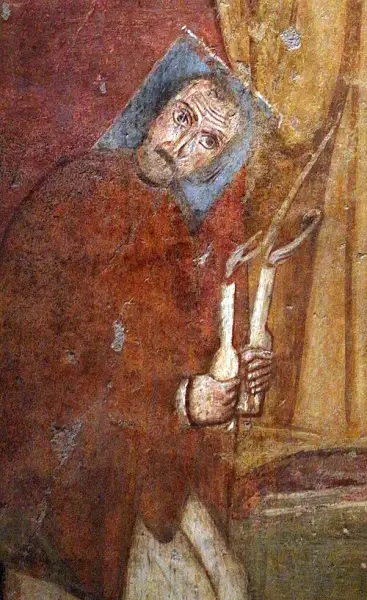
Overview
Zachary, born in 679 of a Greek family in the Calabrian town of Santa Severina, was Rome's bishop from December 741 down to his death on 15 March 752, and stands as the last pope of the Byzantine Papacy. Having served as a deacon of the Roman church — signing the decrees of the Roman council convoked in 732 and being created cardinal by Gregory III — he succeeded Gregory III at a moment when the papal cities lay exposed to the Lombard dukes in revolt. Zachary met the danger in person: he turned directly to King Liutprand, who out of respect for the pope restored all the territory the Lombards had seized and freed the captives without ransom, and at Ravenna's plea he persuaded the same king to abandon a planned attack on the exarchate. His letters guided Boniface of Mainz in reforming the German church, confirmed new bishoprics at Würzburg, Büraburg, and Erfurt, and validated Boniface's metropolitans at Rouen, Reims, and Sens; in 745 he convened a Roman synod against a tendency toward the worship of angels. Asked by Pepin the Short whether the man who held royal power should be king, Zachary answered that he should — and the Merovingian Childeric III gave way to the Carolingian dynasty. He built the first Santa Maria sopra Minerva, rebuked the emperor Constantine V for iconoclasm, and banned the slave trade at Rome, ransoming the captives with his own treasury.
The Complete Life
A Greek of Calabria in the Roman Church
Zachary was born in 679 into a family of Greek origin in Santa Severina, a Calabrian town that then belonged to the Eastern Roman Empire, and he belongs by birth to that long line of Greek-speaking southern Italians who rose to govern the Roman church. Of his boyhood and education nothing certain is recorded, but his subsequent career implies a formation in both the Greek and Latin traditions and a standing in the Roman clergy high enough to mark him for the highest office. He was almost certainly a deacon of the Roman Church, and it was in that office that he put his signature to the decrees of the Roman council held in 732 — the earliest documentary trace of his life. On 12 April of that same year Gregory III created him cardinal, binding him closely to the pope whom he would eventually succeed. The Rome of his maturity was a city under Byzantine sovereignty but increasingly left to its own devices, squeezed between a distant and iconoclastic emperor and the aggressive Lombard kingdom to the north. In that school of peril, the deacon from Calabria acquired the diplomatic temper for which history remembers him.
§ Early career
Successor of Gregory III
When Gregory III died in 741, Zachary was selected to succeed him, being elected on 3 or 5 December and consecrated on 4 or 6 December of that year. He took over a papacy in acute danger: Gregory's alliance with the Lombard Duchy of Spoleto had left the papal cities in peril once both Spoleto and Benevento's dukes were in revolt, and Rome stood between a rebellious Lombard south and an unpredictable Lombard kingdom. Where other pontiffs might have sought a new foreign patron at once, Zachary's first instrument was personal diplomacy — journeys, conversations, and letters rather than armies. He would prove the last pope of the Byzantine Papacy, the final man to occupy Peter's throne while Rome still acknowledged the emperor at Constantinople, and in that capacity he had to deal as nearly an equal with the Lombard king, the exarch's officials, the Frankish mayors of the palace, and the Byzantine court. The Liber pontificalis, the contemporary history of the popes, lingers above all on how personally Zachary influenced Liutprand and that king's successor Ratchis, a testimony to the fact that his greatest weapon in those years was the force of his own character.
§ Pontificate
Peace with the Lombards, Order in the German Church
Zachary's dealings with King Liutprand set the tone of his pontificate. Turning directly to the king, he won from him, out of respect for the pope's person, the restoration to the Roman church of every territory the Lombards had seized and the return of the captives without ransom. When the Exarchate of Ravenna begged his help against a planned Lombard assault, Zachary persuaded Liutprand to abandon the attack and restore what he had taken from the city — an extraordinary intervention of a Roman bishop in the defense of an imperial province. His correspondence reached as far north as it did east. With Archbishop Boniface of Mainz, the apostle of Germany, he exchanged letters counseling firmness against disreputable prelates such as Milo of Reims and Trier; at Boniface's request he gave his confirmation to the three newly erected bishoprics of Würzburg, Büraburg, and Erfurt, named him papal legate for the Concilium Germanicum of 742, and later ratified the metropolitans Boniface had appointed at Rouen, Reims, and Sens. In 745 he convened a Roman synod to discourage a spreading tendency toward the worship of angels. And when Pepin the Short, mayor of the palace to the puppet-king Childeric III, asked whether the man who actually held royal power ought to be king, Zachary ruled that he should; the Frankish nobles promptly abandoned the last Merovingian and raised Pepin to the throne. He even remonstrated with the Byzantine emperor Constantine V over his iconoclastic policies.
§ Pontificate
Builder, Reformer, Ransomer of Captives
The last decade of Zachary's life was given as much to building as to diplomacy. He erected the original church of Santa Maria sopra Minerva, raising Christian worship over an ancient temple of Minerva near the Pantheon, and he restored the decaying Lateran Palace, the seat of the papal household; in the course of that work he moved the relic of Saint George's head to the church of San Giorgio al Velabro. One act above all displayed the tenderness beneath the statesman's skill. When Venetian merchants purchased many slaves in Rome for sale to the Muslims of Africa, Zachary forbade the traffic outright — one of the earliest papal condemnations of the slave trade — and then paid the merchants their own price, giving the slaves their freedom. It was the policy of a man who counted no person as merchandise. He died on 15 March 752, in his seventy-third year or thereabouts, and found burial in St. Peter's Basilica. His elected successor, Stephen, lived only days, so that the man finally seated on Peter's throne was Stephen II, under whom the Frankish alliance Zachary had blessed would bear its fruit in the Donation of Pepin and the birth of the Papal States.
§ Death and legacy
Judgments of History and of the Churches
Zachary is venerated as a saint in the Catholic Church and the Eastern Orthodox Church alike, his feast kept on 15 March, the day of his death. Like the early bishops of Rome he was canonized by the voice of the faithful rather than by process, and the esteem of his own century has never been withdrawn. The church historian Johann Peter Kirsch judged that across a troubled era Zachary showed himself a successor of Peter who was excellent, capable, vigorous, and charitable. Peter Partner went further still, calling him a skilled diplomat and perhaps the subtlest and most able of all the Roman pontiffs in that dark corridor where the Roman See stood hovering just within the doors of the Byzantine world. His letters and decrees, preserved in Migne's Patrologia Latina, remain the documentary backbone of the eighth-century papacy's relations with Germany, Francia, and Constantinople. Historians of the medieval church note in his sanction of Pepin's usurpation a decision of world-historical consequence, for it bound the papacy to the Carolingian house and redirected its political future away from Byzantium — the last act, in effect, of the Byzantine Papacy whose final occupant Zachary was.
§ Death and legacy
Timeline
- 679
Born of a Greek-origin family at Santa Severina in Calabria
§ Early career
- 12 Apr 732
Was created cardinal by Gregory III, and in his capacity as deacon of the Roman Church put his signature to the decrees issued by the Roman council of that year
§ Early career
- Dec 741
Was selected to succeed Gregory III as pope, elected 3 or 5 December and consecrated 4 or 6 December
§ Early career
- 742
Named Boniface of Mainz to serve as papal legate for the Concilium Germanicum, which Carloman, mayor of the Frankish palace, hosted
§ Pontificate
- 745
Called a synod together in Rome to discourage a spreading inclination toward the worship of angels
§ Pontificate
- 15 Mar 752
Died in Rome, was buried in St. Peter's Basilica, and was succeeded after a brief interval by Stephen II
§ Death and legacy
In Their Own Words
As for Milo and his like, who are doing great injury to the church of God, preach in season and out of season, according to the word of the Apostle, that they cease from their evil ways.
The Record
- Major works
- Letters and decrees, published in Migne, Patrologia Latina, vol. 89, pp. 917–960·Built the original church of Santa Maria sopra Minerva in Rome
- Canonization
- Pre-congregation; venerated in the Catholic Church and the Eastern Orthodox Church
Prayer
Bibliography
Show 9 sources
- Cormenin, Louis-Marie de Lahaye vicomte de (1851), A Complete History of the Popes of Rome, from Saint Peter, the First Bishop, to Pius the Ninth, the Present Pope, J. & J. L. Gihon, p. 185.
- Miranda, Salvador. "The Cardinals of the Holy Roman Church". Retrieved 9 July 2015.
- Kirsch, Johann Peter (1912). "Pope St. Zachary". In Herbermann, Charles (ed.). Catholic Encyclopedia. Vol. 15. New York: Robert Appleton Company.
- Butler, Alban (1866). "Zachary, Pope and Confessor". The Lives of the Fathers, Martyrs, and Other Principal Saints. Vol. III. Dublin: James Duffy.
- Chisholm, Hugh, ed. (1911). "Zacharias, St". Encyclopædia Britannica. Vol. 20 (11th ed.). Cambridge University Press. p. 950.
- Wansbrough OSB, Henry. "St. Boniface, Monk and Missioner", Prayer and Thought in Monastic Tradition: Essays in Honour of Benedicta Ward SLG, (Santha Bhattacharji, Dominic Mattos, Rowan Williams, eds.), A&C Black, 2014, p. 133, ISBN 9780567082954.
- "Assigning Names to Angels – ZENIT – English". zenit.org. September 2015. Retrieved 2018-02-13.
- Stantchev, Stefan K. (3 July 2014). Spiritual Rationality: Papal Embargo as Cultural Practice. Oxford University Press. p. 28. ISBN 9780191009235.
- Partner, Peter. The Lands of St. Peter: The Papal State in the Middle Ages and the Early Renaissance, University of California Press, 1972, p. 17, ISBN 9780520021815.
Profile text adapted from the Wikipedia article, licensed CC BY-SA 4.0.
Pray with this saint every day
Save St. Zachary to your favorites, read the full profile, and get feast-day reminders in the Saints app.
Get the Saints AppFree on the App Store for iPhone and iPad