
fl. c. 520·Feast November 22
St. Pragmatius of Autun
Bishop of Autun in sixth-century Gaul
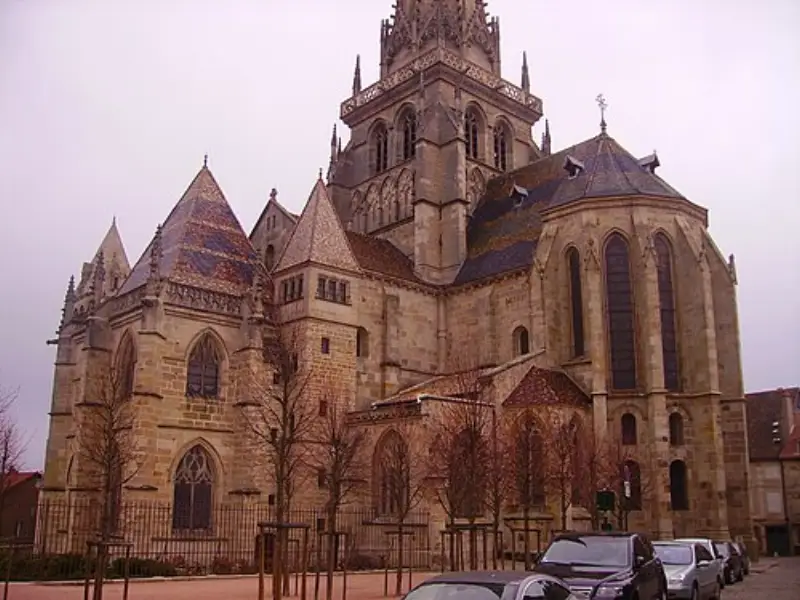
Overview
Pragmatius, known in French as Pragmace, was bishop of Autun in the sixth century, flourishing around the year 520. He belonged to the generation of Gallic prelates who led the church after the passing of Roman authority in Gaul, when bishops governed cities, ordered discipline through councils, and preserved the learning of the old order under the new Frankish rulers. Two friendships mark his name in the record: he was a friend of Sidonius Apollinaris, the poet-bishop whose correspondence illuminates the episcopate of the age, and of Avitus of Vienne, one of the most influential churchmen of the period. Pragmatius also shared in the conciliar life of the Gallic church, lending his voice to at least one of the assemblies of that era. The Roman Catholic Church venerates him as a saint, keeping his feast each year on 22 November. His cathedral city of Autun remained one of the great sees of Burgundy, and his name has been kept in its list of bishops and in the calendars of the church.
The Complete Life
Vocation as Bishop
Pragmatius held the episcopal see of Autun in the sixth century, his activity falling around the year 520. Autun, the ancient Augustodunum, was among the principal cities of Burgundy, and its bishop stood among the leading churchmen of Gaul. Pragmatius exercised that office in the decades when the Gallo-Roman order was giving way to Frankish rule, an age in which bishops were the steady governors of their cities and the chief defenders of their people. His standing among his contemporaries is shown by the company he kept. He was a friend of Sidonius Apollinaris, the aristocrat, poet, and bishop of Clermont whose letters preserve a vivid picture of the Gallic church of the day, and of Avitus of Vienne, whose counsel was sought far beyond his own province. To be numbered among the friends of such men indicates that Pragmatius moved within the highest circle of the episcopate of Gaul. His see of Autun had produced bishops of renown in earlier generations, and he carried that tradition forward in a generation that demanded both learning and steadiness from its shepherds.
§ Introduction
Legacy and Veneration
The lasting work of Pragmatius was his participation in the common life of the Gallic church: he sat in at least one of the episcopal assemblies of that age, gatherings through which the bishops of Gaul settled discipline, doctrine, and the relations of the church with the new powers of the age. Such conciliar service was the ordinary but essential labor by which the sixth-century church held together a fractured society, and Pragmatius' presence in it places him among the builders of the Gallic episcopate. His memory was preserved in the church of Autun and beyond, and he came to be honored as a saint. The Roman Catholic Church venerates him, and his feast is celebrated on 22 November. French piety knows him under the name Pragmace, and his commemoration has been kept in the calendars of the church that grew from the see he governed. Though little of his outward career has survived, the enduring witness of his friendships, his council, and his cult attests a bishop who served his generation faithfully and whose name the church of Autun was not willing to let perish.
§ Introduction
The Record
- Canonization
- Pre-congregation; venerated as a saint by the Roman Catholic Church
Prayer
Bibliography
Show 2 sources
- Nominis: Saint Pragmace
- Forum orthodoxe.com: saints pour le 22 novembre du calendrier ecclésiastique
Profile text adapted from the Wikipedia article, licensed CC BY-SA 4.0.
Pray with this saint every day
Save St. Pragmatius of Autun to your favorites, read the full profile, and get feast-day reminders in the Saints app.
Get the Saints AppFree on the App Store for iPhone and iPad