
died c. 1151·Feast December 30
St. Raoul
English monk who founded Vaucelles Abbey
Overview
Raoul, known also as Radolph, Rodulphe, or Ralph of Vaucelles, was an Englishman of Benedictine monastic training who gave his allegiance to Bernard of Clairvaux and founded the famous abbey of Vaucelles in northern France. Born probably at Merston in England, he was professed at Clairvaux itself, the mother house of the Cistercian reform, before Bernard sent him in 1132 to establish a monastery at Vaucelles near Cambrai. By 1145 the abbey church and buildings had risen, and the house grew to hold several hundred monks, becoming the largest Cistercian abbey in Europe. Raoul served as its abbot for twenty years, giving himself with his community to prayer, the reading of the sacred books, and the teaching of agriculture. In a time of want he fed as many as five thousand paupers for months together. Contemporaries counted him among the learned writers of his age. He died around 1151 and was canonized in 1179; his liturgical feast is kept on 30 December.
The Complete Life
From England to Clairvaux
Merston, in England, was probably where Raoul first saw the light; his monastic life began in the Benedictine tradition before the turn of circumstance and grace carried him to the centre of the greatest reform of the age. He attached himself to Bernard of Clairvaux, the abbot whose preaching and holiness were drawing hundreds of young men into the Cistercian order Bernard's generation had made the spiritual power of Western monasticism. Raoul was professed as a monk at Clairvaux itself, the Burgundian mother house whose discipline he would later transplant to foreign soil. To leave England for Clairvaux was to leave family, country, and tongue for a life of severe observance among strangers; that he did so, and won the confidence of Bernard personally, marks the quality the saint saw in him. The proof came in 1132, when Bernard sent the English monk north with a founding commission: to establish a monastery at Vaucelles, in the northwest of France near Cambrai, in the Flemish border country where the Cistercian expansion was reaching new peoples. It was the work of a lifetime, and Raoul gave it the remaining twenty years of his life.
§ Life
The Building of Vaucelles
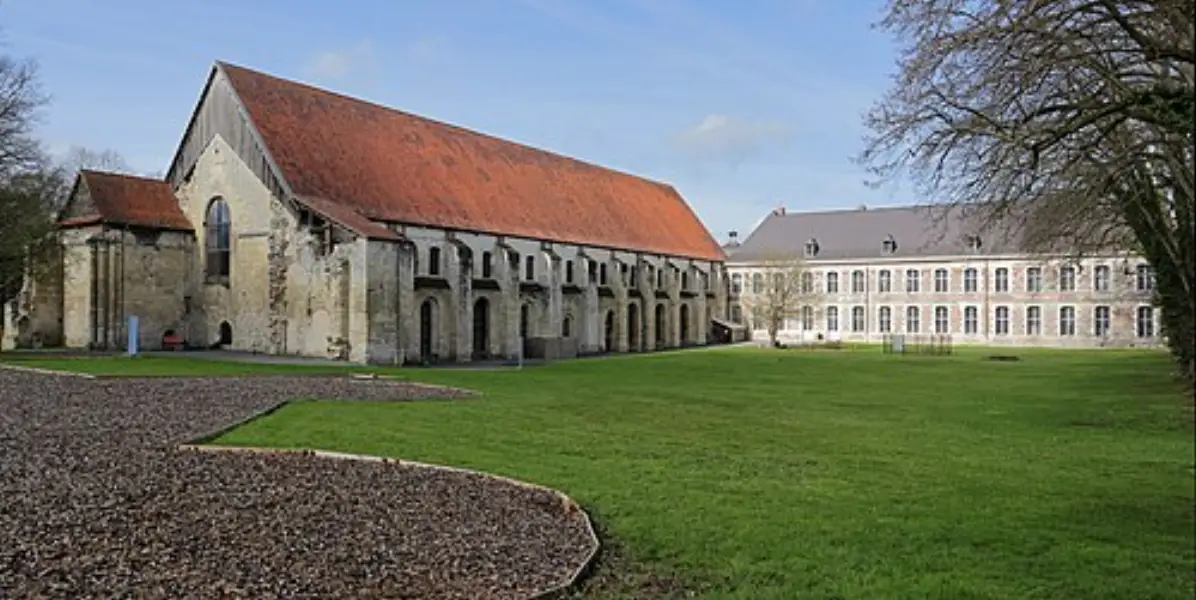
The founding at Vaucelles tested everything a new abbot and his small community could endure. Bernard had sent Raoul in 1132 to a site near Cambrai, and the work of building proceeded through the years of hardship that every Cistercian foundation of the era knew, land cleared, cloisters raised, observance planted among recruits gathered from the surrounding country. By 1145 the Abbaye de Vaucelles stood complete under his direction, and the house flourished beyond the usual measure of a young abbey: it came to number several hundred monks and outgrew every other house of the Cistercian order in Europe, a monument to the founder's constancy and to the attraction of the order's austere life. Its restored cloister remains to this day. Raoul governed the community as abbot for twenty years, and the pattern of his government joined the contemplative and the practical: with his community he gave himself to prayer and to the reading of the sacred books, and he taught agriculture, the craft by which the Cistercians made wasteland fruitful. When famine came and want pressed on the countryside, the abbot of Vaucelles supported as many as five thousand paupers for months together, feeding the poor at the abbey's cost.
§ Life
Canonized for Rectitude and Austerity
Raoul died around 1151, after two decades as abbot, and the Church moved quickly to honour him: he was canonized in 1179, within thirty years of his death, for his rectitude and austerity, the two virtues that had defined his government of Vaucelles. His cult was confirmed in the liturgy, and he can be celebrated on 30 December. In the memory of his order he stood among the generation of St. Bernard's own companions, the monks who carried Clairvaux across Europe; Charles de Visch's Bibliothèque Cistercienne ranks him with the learned authors of his age, a judgement preserving the memory of works that have not survived. Devotion to him crossed borders, as he had crossed them in life: he is remembered in French tradition as Saint Raoul and Dom Rodulphe, in Italy as San Raùl. For the monks of Vaucelles his canonization consecrated the house's own history, the largest abbey of the order in Europe ruled to the end by a saint whose simplicity matched the cloister he built.
§ Life
The Largest Abbey of the Order
The measure of Raoul's legacy is the abbey itself. Vaucelles, founded in 1132 with a founding party from Clairvaux, was by 1145 a completed monastic city, and within a generation it had grown to several hundred monks, surpassing every other house of the Cistercian order in size. The abbey's restored cloister still stands in the country near Cambrai, the visible remainder of the foundation that occupied the last twenty years of the English abbot's life. The intellectual tradition Raoul represented endured in the Cistercian lists of authors, where the Bibliothèque Cistercienne of Charles de Visch records his name among the learned writers of his century. His care for the poor passed into the abbey's corporate memory: the feeding of five thousand paupers in a time of want remained the standard by which the house's charity was remembered. Liturgically he is honoured on 30 December, and his cult, born in the Flemish border country where he laboured, spread to Italy under the name of San Raùl. Among the English saints who gave their lives to the continental reform, Raoul of Vaucelles holds a place of honour as the builder of Bernard's largest house.
§ Life
Timeline
- 1132
Sent by St. Bernard of Clairvaux from Clairvaux to found a monastery at Vaucelles near Cambrai.
§ Life
- 1145
Brought the building of the Abbey of Vaucelles to completion, after which it grew into the largest abbey of the Cistercian order in Europe.
§ Life
- 1151
Died after serving some twenty years as abbot of Vaucelles.
§ Life
- 1179
Canonized for his rectitude and austerity.
§ Life
The Record
- Major works
- Vaucelles Abbey
- Canonization
- Canonized in 1179 for his rectitude and austerity.
Prayer
Bibliography
Show 5 sources
- "SANTORAL DEL DIA 30 DICIEMBRE". www.elalmanaque.com.
- Académie des inscriptions & belles-lettres (France) (1814). Histoire litteraire de la France. Firmin Didot. p. 125 – via Internet Archive.
- The Cyclopedia of Biblical, Theological, and Ecclesiastical Literature. (James Strong and John McClintock, eds.) Harper and Brothers; NY; 1880.
- "Vaucelles (Abbey) - Cister.net". www.cister.net.
- "Abbaye de Vaucelles". www.abbayedevaucelles.com.
Profile text adapted from the Wikipedia article, licensed CC BY-SA 4.0.
Pray with this saint every day
Save St. Raoul to your favorites, read the full profile, and get feast-day reminders in the Saints app.
Get the Saints AppFree on the App Store for iPhone and iPad