
died 3 July 1118·Feast July 8
St. Raymond of Toulouse
Canon of St. Sernin renowned for generosity
Overview
Raymond Gayrard — remembered in the calendar as Raymond of Toulouse — served as chanter and canon at the church of St. Sernin in Toulouse, remembered chiefly for his generosity. A native of that city, he had been a married man, and it was the death of his wife that opened the path to religious life for him. Giving himself to the service of the collegiate church of St. Sernin, he became one of its canons and threw his energies into the rebuilding of the great church, which under his care rose again and drew crowds of pilgrims. His charity toward the poor of the city was such that generosity became the trait by which his contemporaries summed him up, and an old hospital of St. Raymond in Toulouse long preserved his name. He died on 3 July 1118 and was buried where his labors had been spent. Reports of miracles at his tomb followed soon upon his death, and devotion to him endured through the centuries, receiving papal recognition when he was beatified by Pope Innocent X in 1652. His feast is kept on 8 July, and the basilica of St. Sernin remains the shrine of his memory.
The Complete Life
From Bereavement to the Canons' Stall
Raymond Gayrard was born in Toulouse and lived there the first part of his life as the times directed, as a married man of the city. The turning point came with the death of his wife. Rather than allowing bereavement to close his life down, Raymond let it open him to a complete change of state: he entered religious life, taking his place among the canons of the collegiate church of St. Sernin, the great pilgrimage church of Toulouse that housed the remains of the martyred bishop Saturninus. There he served as chanter, charged with the singing of the divine office, and won a reputation that his biographers fixed in a single word — generosity. His almsgiving and open-handedness toward the needy of the city marked him among his fellow canons and the faithful alike. Nor did his service remain merely liturgical. He became a moving spirit in the physical renewal of the church itself, helping to rebuild St. Sernin, whose restored fabric became a magnet for pilgrims and a glory of the city. In him the practical and the devotional were one: the same charity that fed the poor rebuilt the walls that sheltered their prayers.
§ Introduction
Death and the Tomb of Miracles
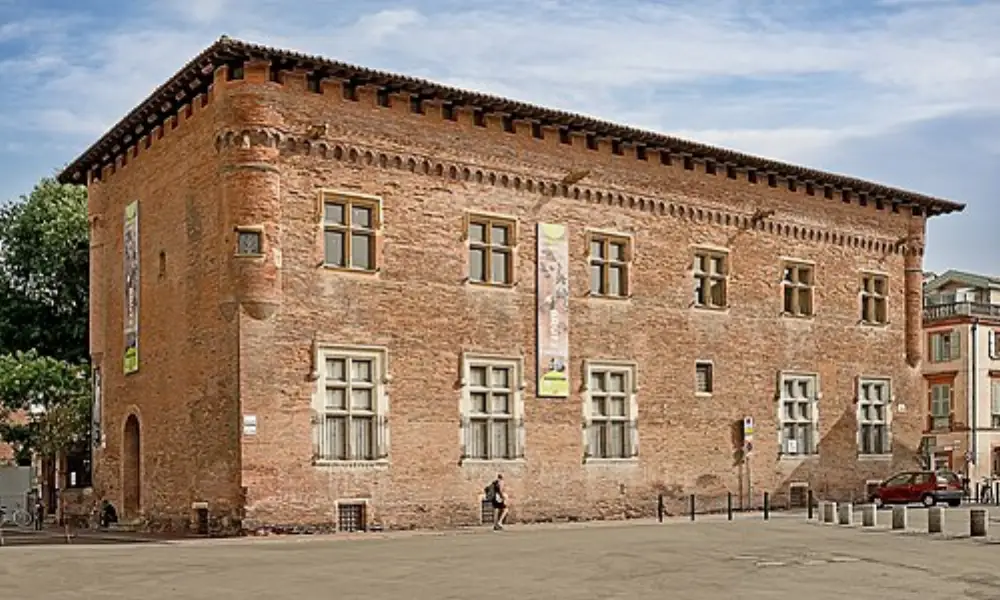
Raymond's long service at St. Sernin ended with his death at Toulouse on 3 July 1118, within the church whose rebuilding had been his crowning work. He was buried there, and his tomb at once became a center of popular devotion. Many miracles were reported at it in the years following his death, as the faithful of Toulouse and the pilgrims who crowded the basilica sought his intercession for their needs. The reports confirmed what his fellow citizens already believed: that the generous canon had gone to God and retained his power to give. The church of St. Sernin, his shrine, itself grew into one of the great pilgrimage churches of Europe, so that his memory remained embedded in a living center of devotion rather than in records alone. In the city his name endured in more humble and practical forms as well: the old hospital of St. Raymond, of which the surviving building dates from the fifteenth century, kept alive the connection between the saint and the works of mercy he had embodied, and that hospital structure stands today as the Musée Saint-Raymond, a museum of the city's history.
§ Introduction
Beatification and Remembrance
Devotion to Raymond of Toulouse proved durable. More than five centuries after his death, the papacy gave formal recognition to his cult: he was beatified in 1652 by Pope Innocent X, his virtues and the miracles reported at his tomb receiving the Church's official attestation. His feast is celebrated on 8 July, a few days after the anniversary of his death, and his major shrine remains the basilica of St. Sernin in Toulouse, the very church he had helped to raise. He is remembered under two names — Raymond of Toulouse and Raymond Gayrard — a double designation that recalls both the city that formed him and the family from which he came. His story has also entered the artistic and civic memory of Toulouse: the Musée Saint-Raymond, housed in the old hospital that bore his name, keeps his memory at the threshold of the basilica he served. For the faithful he remains a model of the layman transformed by loss into a servant of the Church, the man whose generosity outlived his wealth and whose rebuilding outlived his hands, a canon whose quiet works made a great church a place of pilgrimage.
§ Introduction
Timeline
- 3 Jul 1118
Dies at Toulouse; many miracles are afterwards reported at his tomb
§ Introduction
- 1652
Is beatified by Pope Innocent X
§ Introduction
The Record
- Major works
- Rebuilding of the church of St. Sernin, Toulouse
- Canonization
- Beatified in 1652 by Pope Innocent X
Prayer
Bibliography
Show 2 sources
- "St. Raymond of Toulouse". Catholic Online.
- "Saint Raymond of Toulouse". Patron Saint Index.
Profile text adapted from the Wikipedia article, licensed CC BY-SA 4.0.
Pray with this saint every day
Save St. Raymond of Toulouse to your favorites, read the full profile, and get feast-day reminders in the Saints app.
Get the Saints AppFree on the App Store for iPhone and iPad