
1852-1900·Feast July 9 (with Modeste Andlauer, among the 120 Martyrs of China)
St. Rémy Isoré
Jesuit Priest and Martyr of China
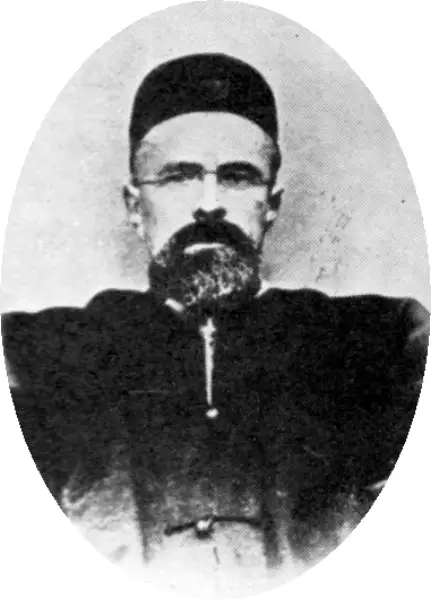
Overview
Rémy Isoré, born at Bambecque in French Flanders on 22 January 1852, was a Jesuit priest killed during the Boxer Rebellion and canonized among the martyrs of China. He studied for the priesthood of his own diocese at the seminary of Cambrai before resolving to enter the Society of Jesus; he passed through the Jesuit seminary at Saint-Acheul, taught in a secondary school, and studied theology in Jersey. Ordained a priest on 31 July 1886, he had already been in China since 1882, having begged his superiors to post him to Zambia and been given China instead, to evangelize there — the missions' arithmetic, not his preference, fixing the field of his life and death. He worked in many different roles in the mission in the following years. At the time of the rise of the Boxer Rebellion he was stationed at Weixian in Zhili, and on learning that the rebels were moving on his parish he made for the nearby Jesuit mission at Wuyi, where Modeste Andlauer was in charge. The next afternoon, 19 June 1900, the rebels beheaded the two priests as they knelt in prayer, and their heads were hung up at the village gate as a warning to other Christians. Pius XII beatified Isoré on 17 April 1956, and Pope John Paul II canonized him on 1 October 2000, in the great company of the 120 Martyrs of China.
The Complete Life
A Seminarian of Cambrai
Rémy Isoré was born on 22 January 1852 at Bambecque, a village of the Francophone Flemish plain in the diocese of Cambrai — the part of France that supplied the Jesuits' Chinese missions with a steady share of their men. His first intention was the ordinary one: he prepared for the priesthood of his own diocese at Cambrai's diocesan seminary. The call to the Jesuits redirected the plan, and he passed into the Jesuit seminary of Saint-Acheul, near Amiens, the order's classic house for late vocations and second-career candidates. His formation followed the Jesuit pattern of the time: teaching in the secondary school while studying theology — the latter at Jersey, where French Jesuits kept their faculties in exile after the anticlerical legislation of the early Third Republic drove the orders from French soil. The detail is worth keeping: the man who died for the faith in China was trained for it, in part, in a house his own country had made impossible.
Sent East, Not South
Isoré had begged his superiors to post him to Zambia, in the missions of the Zambezi; China was where they sent him instead, and he arrived there in 1882. He was ordained a priest on 31 July 1886, four years into his mission, and after ordination worked in many different roles in China — the standard career of a mission priest in the vast north Chinese field, where one man might serve parishes, schools, and outstations across a district the size of a French province. The missions of Zhili, around Tianjin and Beijing, were in these years a church growing fast under pressure: conversions were many, anti-Christian feeling among the gentry and the sects was rising, and the Boxer movement that would break over the missions at the century's end was already forming in the countryside. The Zhili missions around Tianjin were in these years a church growing quickly under rising pressure, and a mission priest's career ran across parishes, schools, and outstations.
Wuyi, 19 June 1900
Isoré was stationed at Weixian, in Zhili, at the time of the rise of the Boxer Rebellion. On hearing news of the rebels heading toward his parish, he did not withdraw; he went to the nearby Jesuit mission at Wuyi, which was in the charge of Modeste Andlauer, a fellow French Jesuit — whether to stand with him or to make a common decision, the accounts do not distinguish. The next afternoon, 19 June 1900, the rebels put Andlauer and Isoré to death by the sword as the two knelt in prayer, and their severed heads were set up at the gate of the village as a warning meant for other Christians. The two deaths belonged to the summer's great killing, in which thousands of Chinese Christians and some two hundred missionaries and their children died; the two priests' manner of death — kneeling, at prayer, side by side — became one of the fixed images of that summer.
The 120 Martyrs of China
Isoré's cause joined the long process of the Chinese martyrs. He was beatified by Pope Pius XII on 17 April 1956, in one of the groups of Boxer-era martyrs raised in the mid-twentieth century, and canonized by Pope John Paul II on 1 October 2000 in the company of the 120 Martyrs of China — the sweeping canonization that gathered Augustinian and Dominican, Franciscan and Jesuit, Chinese lay catechists and their children, priests of the Paris Foreign Missions and Chinese virgins, into a single calendar. The canonization, falling as it did in the year of the Church's jubilee and in a season of fresh tension with the Chinese state, was contested by Beijing and celebrated by the universal Church; Isoré and Andlauer, who share a martyrdom, also effectively share a cult, and are usually named together. His feast among the martyrs of China is kept with Andlauer on 19 June or in the common memorial.
A Quiet Missionary Remembered
Isoré's legacy is bound up with the company he was canonized in: he is remembered as one of the 120, the French Jesuit who asked for Africa, served China for eighteen years, and was found kneeling when the rebels came. The Jesuit sources and the standard dictionaries preserve the outline — Bambecque, Cambrai, Saint-Acheul, Jersey, Weixian, Wuyi — and the essential facts of his death are unusually well attested, since the Boxer killings were investigated in detail for the beatification processes. For the Church in China, whose faithful bore the overwhelming share of that summer's losses, the foreign missionaries like Isoré stand in the calendar as witnesses among witnesses; his particular addition to the common image is the small one the sources record: the man who went where he was sent rather than where he asked. The Boxer killings were investigated in detail for the beatification processes, so that the circumstances of his death at Wuyi are unusually well attested for a martyr of the period.
Timeline
- 22 Jan 1852
Born at Bambecque in northern France
§ Introduction
- 1882
Sailed for China to evangelize, having originally asked to go to Zambia
§ Mission in China
- 31 Jul 1886
Ordained a priest, after studies at Cambrai, Saint-Acheul and Jersey
§ Mission in China
- 19 Jun 1900
Beheaded at Wuyi beside Modeste Andlauer as Boxer rebels overran the missions
§ Death
- 17 Apr 1956
Beatified by Pope Pius XII in Saint Peter's Square
§ Canonization
- 1 Oct 2000
Canonized by Pope John Paul II together with the other Chinese Martyrs
§ Canonization
The Record
- Patron of
- The missions of China·Martyrs
- Symbols
- Jesuit cassock·Palm of martyrdom
- Canonization
- Beatified by Pope Pius XII on 17 April 1956; canonized by Pope John Paul II on 1 October 2000 among the 120 Martyrs of China
Prayer
Profile text adapted from the Wikipedia article, licensed CC BY-SA 4.0.
Pray with this saint every day
Save St. Rémy Isoré to your favorites, read the full profile, and get feast-day reminders in the Saints app.
Get the Saints AppFree on the App Store for iPhone and iPad