
died 117·Feast September 5
St. Romulus
Martyr of Trajan's court who defended condemned Christians
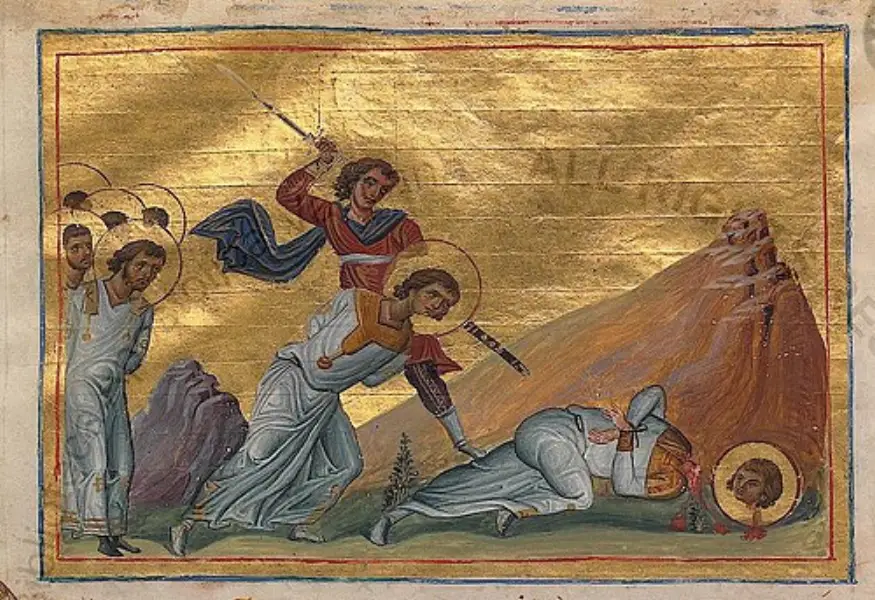
Overview
Romulus was a Christian of the second century who died a martyr's death in the year 117. Unlike most victims of the early persecutions, he belonged to the inner machinery of Roman power, serving within the imperial court of Trajan, a station that gave him standing, access, and a future. When Christians were being tortured and put to death, Romulus did not keep the prudent distance his office allowed. He spoke out in their defense, openly and at the risk of everything he had. The emperor's answer was swift and deliberate. Trajan ordered him seized and condemned to die under torture in the very fashion of the Christians on whose behalf he had pleaded, so that the advocate would share the exact fate of those he had dared to defend. In this way the courtier who had pleaded for the condemned was enrolled among them, dying not for an offense he had committed but for the compassion he had shown. The Church received him among her martyrs from the earliest period, without any formal process, and his memory is kept in the Roman Catholic Church with a feast on September 5, recorded in the calendars and directories of the saints that carry the witness of the early Roman martyrs to the present day.
The Complete Life
A Voice for the Persecuted
In the year 117, within the circle of the emperor Trajan, a man of the imperial court did the one thing his position could least excuse: he took the side of the condemned. Romulus was a member of Trajan's court, an insider in the very machinery that was processing Christians to torture and execution. The Christians of the time suffered under a sentence that required no particular crime — the refusal to worship the gods of the empire was enough — and the tortures to which they were submitted were designed to break body and will together. Those who moved in courtly circles could observe all of this at close range and survive, provided they observed it silently. Romulus refused the bargain. He spoke out in defense of the Christians who were being tortured and martyred, using whatever weight his place at court gave him on behalf of people who had none. The emperor's response made the political meaning of the gesture unmistakable: Trajan ordered Romulus arrested and put to torture, and decreed that he should suffer death by the very torments endured by those whose cause he had pleaded. The penalty was thus crafted as a public lesson — that anyone who pleaded for the condemned would be counted with the condemned. Romulus accepted the lesson and transformed it, dying in the company and the manner of the martyrs his courage had chosen as brothers.
§ Romulus (martyr)
Feast and Memory
The Church numbered Romulus among her martyrs from the beginning, in the age before canonization existed as a formal process, when the witness of blood was itself the certificate of sanctity. His cult passed into the devotional memory of the Roman Catholic Church, which venerates him with a feast kept on September 5. The date is recorded in the modern calendars and directories of the saints — the compilations, such as those of Catholic Online and the daily martyrologies of the Catholic web, that carry the roster of the early Roman witnesses into contemporary piety — so that each year, as September opens, his name is set before the faithful alongside the great martyrs of the persecution eras. His story holds a particular place among those memories because of the vantage point from which it was lived. Most of the second-century martyrs were seized from the margins of society; Romulus acted from the center of power, where silence was possible and defense was not. His witness has therefore encouraged Christians in every age who have found themselves inside establishments that injure the innocent, reminding them that rank confers not exemption from charity but a larger obligation to it. The courtier of Trajan who died the death of the people he defended remains the patron, in spirit, of every conscience that speaks where speaking is costly.
§ Romulus (martyr)
The Record
- Canonization
- Pre-congregation martyr, honored by the Church since antiquity
Prayer
Bibliography
Show 2 sources
Profile text adapted from the Wikipedia article, licensed CC BY-SA 4.0.
Pray with this saint every day
Save St. Romulus to your favorites, read the full profile, and get feast-day reminders in the Saints app.
Get the Saints AppFree on the App Store for iPhone and iPad