
1656 – 1728·Feast May 7
St. Rose Venerini
Pioneer of girls' education in Italy
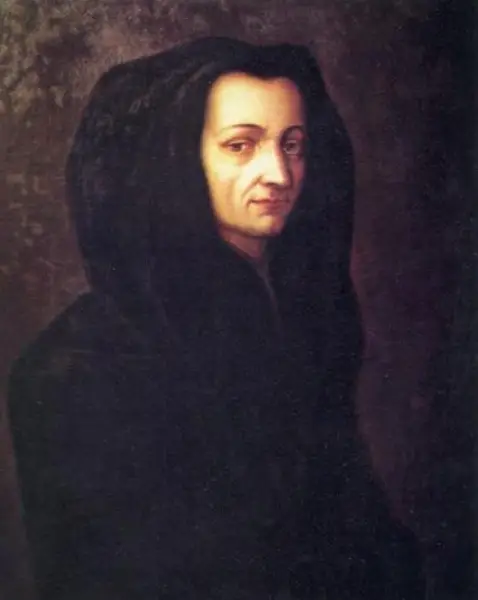
Overview
Rose Venerini was an Italian religious educator who gave Italy its first public schools for girls. Born in Viterbo in 1656 to a respected physician and his wife, she made a vow of consecration to God as a child, passed briefly through Dominican convent life, and returned home to a household marked by successive deaths. In 1684 she began gathering the women of her neighborhood to pray the rosary, and there she recognized the cultural and spiritual destitution of ordinary women and her own call to teach. On 30 August 1685, with her bishop's approval, she left her father's house and opened her first school for poor girls in Viterbo. Despite suspicion from clergy who regarded catechesis as their own preserve, and despite attacks that at times reached arson, her schools multiplied. Invited by Cardinal Giovanni Barbarigo, she planted ten schools around Montefiascone and Lake Bolsena between 1692 and 1694, and after years of struggle she co-founded a school in Rome in 1713. Pope Clement XI visited it in 1716 and gave his approval, telling her that her schools would sanctify Rome. She eventually opened more than forty schools, and her confraternity of teachers became the Religious Teachers Venerini, a congregation that carried her work across the world.
The Complete Life
A Household of Sorrows
Rose Venerini was born at Viterbo on 9 February 1656, into a family of standing in that Tuscan city. Her father, Goffredo, was a celebrated and accomplished physician who had come originally from Castellone di Suasa in the Marche; her mother, Marzia Zampichetti, belonged to an ancient family of Viterbo. Four siblings grew up around her: Dominico, Maria Maddalena, Rosa, and Orazio. At seven years of age the child pledged herself entirely to God, a promise that survived every later trial. Her first test of that vocation came at twenty, in the autumn of 1676. After the death of the man to whom she had been engaged, and at her father's counsel she entered the Dominican Monastery of St. Catherine, whose community included her aunt Anna Cecilia. In the cloister she learned meditation and silent prayer, disciplines that would nourish her for the rest of her life. She remained only a few months: her father died, and she returned home to care for her mother. The losses then accumulated. Domenico died at twenty-seven, and his mother followed within two months; Maria Maddalena married and moved to a household of her own, and Orazio too was taken. Grief had stripped her life down to essentials, and into that emptiness a new direction soon entered.
§ Early life
The Rosary in Her Own Home
In May 1684, when she was twenty-four, Venerini began to invite the girls and women of her neighborhood into her home to pray the rosary together. What began as simple devotion became a revelation. In teaching these women she came to see how ignorance, moral neglect, and spiritual want held the ordinary women of the laboring classes captive — untaught, unformed, and overlooked by the institutions of the age. The deficiencies she observed in their education and religious formation troubled her deeply, and out of that dismay her purpose crystallized: the Christian schooling and upbringing of girls would be her life's work. A year of prayer and preparation followed. On 30 August 1685, guided by her spiritual director and with the approval of her bishop, and aided by two friends, Gerolama Coluzzelli and Porzia Bacci, she left her father's house and opened her first school in Viterbo, a school for poor girls and young women. It was the country's first public school for girls — a fact that placed her, as Alban Butler observed, among those who chose to be teachers in the world rather than contemplatives in the convent. The school set out to form poor girls thoroughly in Christian faith and to ready them for society, and people soon called its foundress a born teacher.
§ Career
Schools Against Opposition
The enterprise met resistance from the start. Venerini's teachers labored under public scrutiny — suspected because they were women, because their methods were unconventional, and because parts of the clergy considered the teaching of the catechism their own exclusive province. The opposition sometimes turned violent, producing arson and physical attacks on the teachers. Venerini was not deterred. In time the clergy themselves acknowledged the good her schools worked in the community, and her reputation spread beyond Viterbo. In 1692 Cardinal Giovanni Barbarigo, nephew of St. Gregorio Barbarigo, invited her to Montefiascone, and between 1692 and 1694 she founded ten schools in that city and the villages surrounding Lake Bolsena, with others following across Lazio. Barbarigo supplied the money; Venerini spread word of the schools among the families, formed the teachers, and set the houses in order. There she formed a deep friendship with St. Lucy Filippini, whom she placed at the head of the schools and who later gathered the diocese's teachers into the separate congregation of the Religious Teachers Filippini. A first attempt to establish a school in Rome failed, but after six years of effort she co-founded one in central Rome, near the Capitoline Hill, on 8 December 1713. On 24 October 1716 Pope Clement XI, accompanied by eight cardinals, came to observe the classes and approved the work, declaring that these schools would sanctify Rome. With papal backing she went on to open more than forty schools.
§ Career
Action Fed by Prayer
Venerini's interior life held two commitments in balance that many find hard to reconcile: tireless apostolic labor and deep contemplative prayer. She followed the spirituality of St. Ignatius of Loyola, and her biographers point to the marriage of outward apostolate and inward contemplative prayer as the hallmark of her sanctity. She received Holy Communion daily at a time when this was far from common practice, drawing strength for her schools from the Eucharist. Two passions animated her, which she named as the passion for God and the passion for the salvation of souls. The Vatican document issued for her canonization records her conviction that the proclamation of the Good News could only be received if people were first freed from the darkness of ignorance and error, and her intuition that professional training could give women human promotion and affirmation in society. Without pretense, and well before her era recognized the principle, she offered the Church the model of the apostolic religious community — women living consecrated lives in the world for the work of teaching. Her own words, preserved in the canonization documents, express the surrender underneath all the activity: nailed to the will of God, she wanted what He wanted and to serve Him exactly as much as pleased Him, neither more nor less.
§ Death and legacy
Death in Rome
Venerini spent her final years in the city where her hardest battle had been fought and won. She died in Rome on 7 May 1728, at the age of seventy-two, leaving behind a network of more than forty schools and a company of trained women teachers formed in her spirit. Devotion to her began almost immediately: a cult arose in the wake of miracles claimed through her intercession. Her remains were laid to rest in the Church of the Gesù in Rome, where they remained until her beatification in 1952, when they were transferred to the General Motherhouse of her congregation in the city. She had not founded an order in the conventional cloistered sense, but a confraternity of women teachers bound by vows and by a shared mission, and this body outlived her. It would in time be raised to the rank of a religious congregation, the Religious Teachers Venerini, known familiarly as the Venerini sisters, and would carry her educational apostolate far beyond the cities of Italy where she herself had labored. The woman who had begun by teaching the rosary in her own living room died as the foundress of a system of education and a religious family whose reach she never saw in full.
§ Death and legacy
Honored by the Church
Recognition of Venerini's sanctity followed the path of modern causes. The diocesan cult that arose at her death in 1728 gave way to formal process, and on 4 May 1952 Pope Pius XII beatified her. On that occasion her remains were moved from the Church of the Gesù to the General Motherhouse in Rome, the motherhouse of the congregation she had inspired. More than half a century later, on 15 October 2006, Pope Benedict XVI canonized her among a group of new saints raised to the altars in St. Peter's. The canonization document for that ceremony highlighted the judgment that had marked her whole career: wherever a new school of hers sprang up, a moral improvement in the young could be noted within a short time. By then her spiritual family had spread worldwide. The Venerini sisters had begun working with Italian immigrants in the United States in 1909, serving from 1971 to 1985 in Switzerland as well, and establishing the first day care centers throughout the northeastern United States. Their houses in time reached India, Brazil, and Cameroon, then Romania, Albania, Chile, and Venezuela, with Nigeria as well. The Church thereby confirmed as universal what the pope of 1716 had glimpsed in a classroom near the Capitoline: a work of sanctification through teaching.
§ Death and legacy
Teacher of Teachers
Venerini's achievement was institutional as much as personal: she created, in the Italy of the late seventeenth century, a new form of religious life for women whose vocation was the classroom. Her first school at Viterbo in 1685 was the first public school for girls in the country, and the forty-odd schools that followed set a pattern that others imitated. Her memory is kept each year on 7 May, the anniversary of her death. The congregation she founded, the Religious Teachers Venerini, carried her method across continents — to Italian immigrant communities in the United States from 1909, where the sisters pioneered day care in the Northeast, and afterward to Switzerland, then to India, Brazil, Cameroon, Romania, Albania, and Chile, with Venezuela and Nigeria besides. Her iconography shows her with the signs of her work: the book or scroll of the teacher, the rosary of her first apostolate, and the children and young women she formed. Catholics honor her as patron of teachers and educators, particularly those in Catholic schools. Two saints stood closest to her story: Lucy Filippini, whom she mentored and placed over the Montefiascone schools, and Cardinal Giovanni Barbarigo, her collaborator. Her own maxim — that she wanted to serve God exactly as much as pleased Him — has become a summary of her spirit for the teachers who inherit her schools.
§ Death and legacy
Timeline
- 9 Feb 1656
Born at Viterbo, daughter of the physician Goffredo Venerini and Marzia Zampichetti.
§ Early life
- 1663
At seven years old, vowed herself wholly to God.
§ Early life
- 1676
Entered the Dominican Monastery of St. Catherine after the death of her fiancé, leaving a few months later to care for her widowed mother.
§ Early life
- May 1684
Began inviting the girls and women of her quarter into her home to recite the rosary.
§ Early life
- 30 Aug 1685
Opened at Viterbo, aided by two friends, a school for poor girls — the earliest public school for girls in Italy.
§ Career
- 1692
At Cardinal Giovanni Barbarigo's invitation, began founding ten schools in Montefiascone and the villages around Lake Bolsena.
§ Career
- 8 Dec 1713
After six years of struggle, opened with partners a school in central Rome by the Capitoline Hill.
§ Career
- 24 Oct 1716
Pope Clement XI, with eight cardinals, visited the Roman school, observed the classes, and approved the work.
§ Career
- 7 May 1728
Died in Rome; a devotional cult soon began after miracles were claimed through her intercession.
§ Death and legacy
- 4 May 1952
Beatified by Pope Pius XII; her remains were transferred to the General Motherhouse in Rome.
§ Death and legacy
- 15 Oct 2006
Canonized by Pope Benedict XVI.
§ Death and legacy
In Their Own Words
I feel so nailed to the Will of God that nothing else matters, neither death nor life. I want what He wants; I want to serve Him as much as pleases Him and no more.
Signora Rosa, you are doing that which we cannot do. We thank you very much, because with these schools you will sanctify Rome.
The Record
- Major works
- First public schools for girls in Italy·More than forty schools founded across Italy·Co-founder of the Roman school near the Capitoline Hill (1713)
- Patron of
- Catholic teachers and educators
- Symbols
- Venerini Sisters·Children or young women·A book or scroll·The Rosary
- Canonization
- Canonized 15 October 2006 by Pope Benedict XVI; beatified 4 May 1952 by Pope Pius XII
Prayer
Bibliography
Show 5 sources
- "Rosa Venerini (1656-1728) - Biography", The Vatican, retrieved 28 February 2024
- "St. Rosa Venerini", Catholic News Agency, archived from the original on July 24, 2019
- "Saint Rose Venerini", Newman Ministry, retrieved 28 February 2024
- Butler, Alban. "St. Rose Venerini", in Butler's Lives of the Saints, pp. 39-40
- "St. Rose Venerini", FaithND, Notre Dame University, retrieved 28 February 2024
Profile text adapted from the Wikipedia article, licensed CC BY-SA 4.0.
Pray with this saint every day
Save St. Rose Venerini to your favorites, read the full profile, and get feast-day reminders in the Saints app.
Get the Saints AppFree on the App Store for iPhone and iPad