
died 107·Feast December 18
St. Rufus and Zosimus
Martyred companions of Ignatius of Antioch
Overview
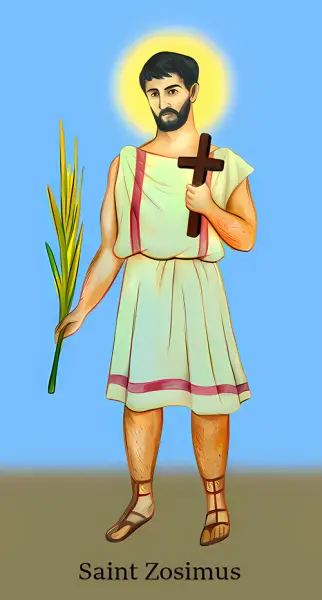
Rufus and Zosimus were Christians of Antioch who died as martyrs in Rome around the year 107, during the persecution of the Church under the emperor Trajan. They were condemned alongside Ignatius of Antioch, the great bishop whose seven letters to the churches have made him one of the most celebrated figures of the sub-apostolic age, and the two companions shared the journey from Syria to the capital that Ignatius made as a condemned man. In the Roman arena they were put to death by wild beasts, suffering their martyrdom two days before Ignatius met the same fate. The Church of the first centuries remembered them as more than the bishop's anonymous fellow sufferers: their names were entered in the calendars of both East and West, and their feast is kept on December 18. They stand among the earliest Christian martyrs whose deaths in the Flavian Amphitheatre are remembered by name, witnesses from the church of Antioch — the community where the disciples were first called Christians — who finished their confession far from home, on the sands of Rome. Statues of the two saints now stand in the colonnade of Saint Peter's Square, where the martyrdom they suffered within sight of the Vatican hill is recalled by the Church that guards their memory.
The Complete Life
Christians of Antioch
Rufus and Zosimus belonged to the church of Antioch, the great Syrian capital where the followers of Jesus were first called Christians, and where the faith had taken deep root by the end of the first century. Their lives before their arrest are wholly unknown — no act of their martyrdom records their origins, their station, or their years — but their presence in the company of the condemned of Antioch under Trajan tells what is necessary: they were confessors whom the imperial authorities found worth condemning. The persecution that reached Antioch in the reign of Trajan claimed its most famous victim in Ignatius, the city's bishop, who was sentenced to be taken across the empire to Rome for exposure to the beasts in the arena. That Rufus and Zosimus shared the bishop's fate suggests that they, too, were marked men of the Antiochene church, arrested in the same sweep against its leadership and condemned on the same charge of professing Christ. The condemned were sent under guard on the long overland and seaborne journey to the capital, where the emperor's justice turned their faith into public spectacle. With them, the church of Antioch sent ahead of its bishop two witnesses whose names the tradition would carefully preserve.
§ Rufus and Zosimus
Death in the Arena, Two Days Before Their Bishop
In Rome, the sentence pronounced at Antioch was carried out. Rufus and Zosimus were brought into the arena and killed by beasts, the punishment by which Rome displayed its power over those who refused the gods of the empire. The tradition records a detail that fixes their place in the story of the Antiochene martyrs: they died two days before Ignatius of Antioch, who suffered the same death in the same city. The two men therefore hold the sorrowful distinction of going first — preceding to the arena the bishop whose letters written along the journey to Rome would become treasures of early Christian literature. Ignatius, in the seven letters he composed as he traveled, spoke constantly of his approaching contest with the beasts and begged the churches not to deprive him of his martyrdom; of the inner life of Rufus and Zosimus on the same road, no writing survives. Their confession is known only by its outcome. Yet the chronology the tradition preserves — two days before the bishop's death — shows that the memory of their execution was kept with precision by the churches, which dated the great martyrdom of Ignatius by that of his two companions.
§ Rufus and Zosimus
Veneration in East and West
The Church received Rufus and Zosimus among her martyrs from the earliest period, without any process beyond the verdict of their blood. Their feast is kept on December 18, and they are venerated both by the Roman Catholic Church and by the Eastern Orthodox Churches, a double commemoration that testifies to the antiquity and breadth of their cult. Martyrs who died in Rome were naturally claimed by the Roman church, but the memory of the pair remained tied as well to their native Antioch, whose Christian community counted them among its own glory. Their names entered the martyrologies that carried the roll of the confessors from generation to generation, and the later tradition grouped them always with Ignatius, whose own feast recalls the persecution of Trajan under which all three died. In modern times their witness received a singular honor in the city where they died: statues of Saint Rufus and Saint Zosimus stand in the colonnade of Saint Peter's Square, among the company of saints who watch over the piazza of the Pope. There, in the shadow of the arena that killed them, the two Antiochenes are forever present to the pilgrims of the Church they died for.
§ Rufus and Zosimus
The Record
- Canonization
- Pre-congregation; venerated as martyrs by Catholic and Orthodox churches since antiquity
Prayer
Bibliography
Show 3 sources
- "CATHOLIC ENCYCLOPEDIA: Saints Rufus". www.newadvent.org. Retrieved 2023-10-09.
- Online, Catholic. "St. Rufus and Zosimus - Saints & Angels". Catholic Online. Retrieved 2023-10-09.
- Catholic Online.
Profile text adapted from the Wikipedia article, licensed CC BY-SA 4.0.
Pray with this saint every day
Save St. Rufus and Zosimus to your favorites, read the full profile, and get feast-day reminders in the Saints app.
Get the Saints AppFree on the App Store for iPhone and iPad