
died 275·Feast January 29
St. Sabinian of Troyes
Convert and martyr near Troyes
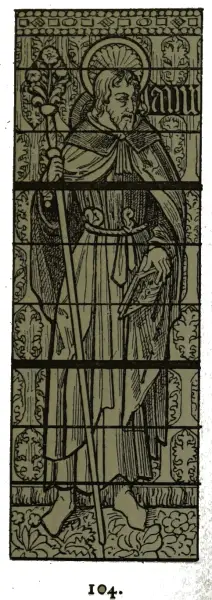
Overview
Sabinian of Troyes was a third-century martyr whose cult has been rooted in the Gallic city of Troyes since his death. Born a pagan on the island of Samos, he was converted to Christianity, tradition says through the preaching of Patroclus of Troyes, and followed his teacher into the persecution launched under Emperor Aurelian. He was beheaded at Rilly-Sainte-Syre, a village near Troyes, in the year 275, dying a short distance from where Patroclus himself had suffered. His feast is kept on January 29 in the Roman Catholic and Orthodox churches, and medieval art depicts him with his throat pierced by a sword, alongside his patron Patroclus and Saint Sabina of Troyes. A later legend, recounted by the Irish hagiographer John O'Hanlon, attaches his burial place to the story of Syra, the blind sister of Saint Fiacre, whose sight was restored after she prayed at the spot where his body lay. Though the surviving record of his life is brief, Sabinian stands among the early named martyrs of Gaul: a convert from the eastern Aegean whose fidelity, learned from a martyr, carried him to the same witness.
The Complete Life
A Pagan Converted by a Martyr
Sabinian was born on the island of Samos, in the eastern Aegean, and by religion was a pagan. His path to sainthood began with conversion, for tradition preserved at Troyes states that he was brought to Christianity by Saint Patroclus, the missionary whose own martyrdom in the same persecution would seal the faith he preached. Converted under Aurelian, an emperor whose reign was hostile to the church, Sabinian embraced his new religion without reserve and evidently without concealment, since the persecution that claimed his teacher reached him as well. He became associated with the Christian community of Troyes in Gaul, where his memory remains rooted to this day. His conversion placed him in a double minority: a newcomer to the faith and an easterner in the Gallic provinces, yet the tradition made him no half-hearted adherent. What the brief notices preserve are the essentials: a pagan who heard the gospel from a man about to die for it, believed what he heard, and followed his teacher all the way to the same fate. The pairing of the two saints in local cult suggests that the discipleship of Sabinian was understood, from the beginning, to have cost him precisely what it cost his master.
§ Sabinian of Troyes
Beheaded at Rilly-Sainte-Syre
Under Emperor Aurelian, Sabinian was put to death for his Christianity, beheaded at Rilly-Sainte-Syre, a village near Troyes, in the year 275. The mode of death, the sword, and the site, outside the city rather than within it, fit the pattern of the early Gallic persecutions, in which confessors were executed beyond the walls and their burial places became the nuclei of local cult. At Troyes the memory of the martyr attached itself firmly to the soil where he died: the village itself came to be known as Rilly-Sainte-Syre in connection with his passion, and his feast was fixed on January 29 in the calendars of the Roman Catholic and Orthodox churches. Medieval iconography preserved the manner of his death in striking form, showing the saint with his throat pierced by a sword, and joined him in art with his patron Patroclus of Troyes and with Saint Sabina of Troyes, the companion figures of the region's memory. What fuller detail his passion once contained has not survived; what remains is the durable outline of a convert who followed his teacher into witness and gave the church of Gaul one of its earliest named martyrs.
§ Sabinian of Troyes
The Healing of Blind Syra
Centuries after his death, Sabinian's burial place became the scene of one of the tenderer legends of the Gallic saints. Syra, the sister of Saint Fiacre, had come from Ireland to France to join her brother and become a nun, and she was blind. John O'Hanlon, the nineteenth-century historian of Ireland's saints, tells how an inspiration came to Fiacre through his merits that his sister would one day see again, while to Syra herself the resting place of the martyr's body was made known. Prostrate upon that ground, praying through her tears, she would not stir from it until her request was granted, and light returned to her eyes. Whatever the tale's historical kernel, its selection of Sabinian's shrine as the site of a healing shows that his cult was alive and credited in the medieval church. He remains in the Roman Martyrology with his feast on January 29, honored in the diocese of Troyes, depicted in sacred art with the sword that killed him, and numbered among the early Gallic martyrs whose names anchor the church's memory to the soil of France.
§ Legend
In Their Own Words
Through his merits, St. Fiacre had an inspiration, that his sister should recover her sight, while to her in like manner was revealed the spot where the body of St. Savinien lay.
The Record
- Symbols
- man with throat pierced by a sword·depicted with Patroclus of Troyes·depicted with Saint Sabina of Troyes
- Canonization
- Pre-congregation martyr, put to death under Emperor Aurelian
Prayer
Bibliography
Show 2 sources
- "St. Sabinian of Troyes", Catholic Forum (saints28.htm, archived at the Wayback Machine 2006-05-07)
- O'Hanlon, John (1875). Lives of the Irish Saints, vol. 4. James Duffy, Dublin, p. 247.
Profile text adapted from the Wikipedia article, licensed CC BY-SA 4.0.
Pray with this saint every day
Save St. Sabinian of Troyes to your favorites, read the full profile, and get feast-day reminders in the Saints app.
Get the Saints AppFree on the App Store for iPhone and iPad