
died 1926 – 1929·Feast 21 May
Saints of the Cristero War
Mexican martyrs of the anti-clerical persecution of 1926–1929
Overview
The Saints of the Cristero War are a group of twenty-five martyrs, most of them Catholic priests, whom Pope John Paul II canonized on May 21, 2000, together with two other Mexican saints. They died during the Cristero War of the late 1920s, executed for carrying out their ministry in defiance of the anti-clerical laws of Plutarco Elías Calles that followed the Mexican Revolution. Priests who took up arms during the conflict were deliberately excluded from the cause, so the group honors pastors and lay catechists killed precisely for their fidelity to the Church's spiritual mission. Their deaths came in many forms: firing squads on country roads, a hanging in a public plaza, shootings in jailhouses, all borne with the Cristero cry of Christ the King on their lips. Alongside the canonized twenty-five stand many companions raised to the altars at other moments: Miguel Pro, beatified in 1988; Mateo Elías Nieves Castillo, beatified in 1997; thirteen martyrs declared blessed by Benedict XVI in 2005; and the teenage layman José Sánchez del Río, canonized by Pope Francis in 2016. The Church keeps their shared memorial on May 21, and honors them as patrons of persecuted Christians.
The Complete Life
Sons of Revolutionary Mexico
The men and women raised to the altars from this persecution came of age as Mexico itself was being remade. Most were native sons of the central-western states where Catholic life ran deepest: Luis Batis Sáinz, born in 1870, entered a minor seminary at the age of twelve and was ordained on the first day of 1894; Rodrigo Aguilar Alemán, born in 1875, trained in Ciudad Guzmán and received ordination in 1905; Román Adame Rosales, the eldest, born in 1859, had been a priest since 1890. A younger generation followed: Agustín Caloca Cortés, born in 1898 in San Juan Bautista de Teúl, saw the seminary of Guadalajara sacked during the Mexican Revolution and finished his formation in a clandestine auxiliary seminary before his ordination in 1923; Atilano Cruz Alvarado, born in 1901 to a ranching family, discovered his vocation while learning to read and write and entered the hidden seminary in 1918. Laymen such as Luis Padilla Gómez, born in Guadalajara in 1899, grew up in the Catholic youth associations that would soon be tested. Their formation was marked by upheaval, and their priesthood by the knowledge that the state had turned hostile.
§ Saints of the Cristero War
Shepherds of an Active Church
Long before the persecution, the future martyrs were builders of parochial life. At Chalchihuites in Zacatecas, Luis Batis Sáinz combined the pastorate with the seminary's spiritual direction, enrolled in the Knights of Columbus, established both a school and a workshop for working men, and won renown for instructing children and adults alike and for hours spent before the Blessed Sacrament. Rodrigo Aguilar Alemán, a man of literary gifts who wrote both prose and poetry, served in several parishes and was pastor at Unión de Tula as a member of Council 2330 of the Knights of Columbus. Román Adame Rosales showed a deep devotion to the Blessed Virgin Mary, directed spiritual exercises, ran parish schools, built numerous chapels on the ranches of his district, and founded the association of the Daughters of Mary and Nocturnal Adoration. Miguel de la Mora served in Colima as a member of Knights of Columbus Council 2140. Totatiche's parish and its seminary prefecture fell to Agustín Caloca, while in 1928 Atilano Cruz received Cuquío, whose flock was tended from the ranch house known as Las Cruces. Their ministry was ordinary, diligent and productive, which is precisely what the coming laws would criminalize.
§ Luis Batis Sáinz
Ministry Under the Calles Law
When the anti-clerical laws of Plutarco Elías Calles closed the churches in 1926, the martyrs faced a choice between silence and hidden service, and they chose service. Román Adame continued his ministry in private houses; Aguilar Alemán, with a warrant out for his arrest, took refuge at the Colegio de San Ignacio in Ejutla and went on celebrating Mass and administering the sacraments; Batis moved to a private house when his church was shut. Some spoke publicly as well: Batis spoke before the National League for the Defense of Religious Liberty as it weighed insurrection, drawing a government denunciation for it, while Miguel de la Mora joined several priests in publicly signing a letter against the anti-religious laws. The record is emphatic that priests who actually took up arms were excluded from the causes, for the Church sought to honor men killed for ministry, not for combat. Warrants, denunciations and patrols closed in on them one by one. Aguilar's last free act was protective: when soldiers reached the seminary, he stayed behind to burn the list of students so they could not be identified, and let himself be captured rather than flee.
§ Rodrigo Aguilar Alemán
Christ the King, Drop by Drop
The spirituality of the Cristero martyrs was Eucharistic, Marian and royal in its confession of Christ's kingship. It is summed up in the prayer attributed to Luis Batis: he asked to be a martyr, though an unworthy minister, and to shed his blood drop by drop for the name of Christ. The rosary ran through their deaths as a constant refrain; Miguel de la Mora was praying his when the officer's single shot came. Their cry was the Cristero motto, Viva Cristo Rey, long live Christ the King, joined to the Virgin of Guadalupe; Batis shouted it at the roadside, and Aguilar Alemán repeated it three times under the noose, each time the rope tightened and lowered him again, until he died on the third suspension. Before the executioner, they chose pardon: Aguilar blessed his captors, gave them his pardon and handed his rosary to one of the executioners. To the young Luis Padilla, begging for confession before the firing squad, Anacleto González Flores answered that this was the hour not for confession but for pardon — God was a Father, never a judge — and that the youth's own blood would cleanse him. Luis knelt in prayer as the bullets came.
§ Rodrigo Aguilar Alemán
The Harvest of Blood, 1926–1929
The deaths of the martyrs span the years of the war and beyond. August of 1926 saw soldiers remove Batis, Manuel Morales, David Roldán Lara and Salvador Lara Puente from the Chalchihuites jail on the pretext of moving them to the state capital, then shoot them beside the road out of town. In the spring of 1927, Luis Padilla Gómez was beaten and shot at the Colorado jail, and Román Adame, after days bound and without food or water at Yahualica, faced an open grave and a firing squad. Late May brought the death of Agustín Caloca: captured as government troops moved to close the seminary at Totatiche, he was held in the jailhouse with Father Cristóbal Magallanes before General Goñi ordered him to Colotlán, where he was executed in the burned city hall. Aguilar Alemán died on the gallows at Ejutla that October; Miguel de la Mora fell to a single shot in August 1927. In July 1928, soldiers raided the Las Cruces ranch at dawn, shot Atilano Cruz at prayer beside the wounded Justino Orona, and dragged the dying men through the central square of Cuquío. Even after the war, the persecution claimed Pedro de Jesús Maldonado in 1937.
§ Agustín Caloca Cortés
Raised to the Altars
The Church's recognition came in careful stages across four pontificates. John Paul II beatified Miguel Pro on September 25, 1988, and Mateo Elías Nieves Castillo on October 12, 1997. The culmination came on May 21, 2000, when the same pope canonized twenty-five martyrs of the Cristero War, among them Cristóbal Magallanes Jara, Luis Batis Sáinz, Rodrigo Aguilar Alemán, Agustín Caloca Cortés, José María Robles Hurtado and Toribio Romo González, together with two saints not martyred in the war, José Maria de Yermo y Parres and María Natividad Venegas de la Torre. On November 15, 2005, Benedict XVI issued an Apostolic Letter raising thirteen more Mexican martyrs to the glory of the altars, with Anacleto González Flores at their head, and fixing their memorial for November 20, the civil anniversary of the Revolution's outbreak under the Plan of San Luis Potosí. Francis completed the witness on October 16, 2016, canonizing José Sánchez del Río, the boy martyr of the Cristero ranks. The canonized group as a whole keeps the shared feast of May 21. From the first, the causes were framed with rigor: armed priests were excluded so that the altars would honor only those who died for the Church's spiritual work.
§ Saints of the Cristero War
Memory in Mexico and Beyond
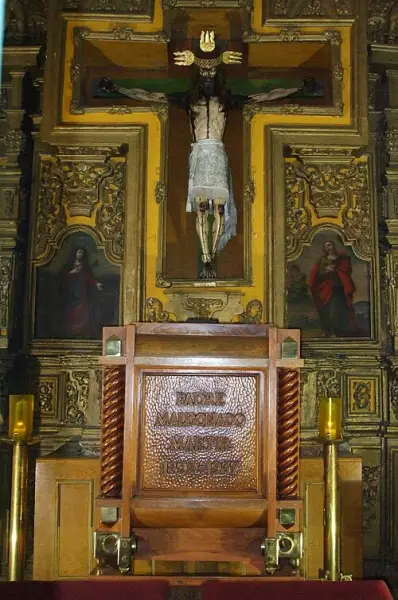
The martyrs remain visible in the sacred landscape of western Mexico. The tomb of San Pedro de Jesús Maldonado draws the faithful in Chihuahua, and in León, Guanajuato, a shrine in the Santuario Expiatorio del Sagrado Corazón de Jesús honors Andrés Solá Molist, José T. Rangel Montaño and Leonardo Pérez Larios. On the facade of the cathedral of Guadalajara, the Asunción de María Santísima, a statue of Román Adame Rosales stands among the honored figures of the archdiocese. Their shared memorial of May 21 places the Mexican witness beside the great martyr-collectives of the twentieth century, and the Church names them patrons of persecuted Christians everywhere, a patronage earned in a conflict over whether the state could silence the altar. Historians have kept the context alive through studies of the Cristero Rebellion and of the culture of martyrdom in modern Mexico. In the broader communion of saints they stand with the child martyrs of Tlaxcala and the long line of Mexican holiness from St. Felipe de Jesús to Rafael Guízar Valencia, a reminder that the faith of the Americas was sealed not only by missionaries but by native sons who would not surrender it.
§ Román Adame Rosales
Timeline
- 1910
Francisco Madero's Plan of San Luis Potosí opened the Mexican Revolution, whose anniversary date later became the memorial of the 2005 beati.
§ Saints of the Cristero War
- 1915
David Galván Bermudes, a future canonized martyr, died at the age of thirty-three.
§ Saints of the Cristero War
- 15 Aug 1926
Luis Batis Sáinz and three laymen of the Mexican Association for Catholic Youth were shot by a firing squad on the road out of Chalchihuites.
§ Luis Batis Sáinz
- 1 Apr 1927
Luis Padilla Gómez, arrested with his mother and sister, was beaten and then shot by firing squad at the Colorado jail.
§ José Dionisio Luis Padilla Gómez
- 21 Apr 1927
Román Adame Rosales, held tied and without food or water at Yahualica, was executed by firing squad at an open grave.
§ Román Adame Rosales
- 25 May 1927
On General Goñi's orders, Agustín Caloca Cortés faced a firing squad inside Colotlán's fire-gutted city hall.
§ Agustín Caloca Cortés
- 7 Aug 1927
Miguel de la Mora, who had publicly signed a letter against the anti-religious laws, was executed without trial by a single shot as he prayed his rosary.
§ Miguel de la Mora
- 28 Oct 1927
Rodrigo Aguilar Alemán was hanged from a mango tree in the main plaza of Ejutla, professing the Cristero motto as he died.
§ Rodrigo Aguilar Alemán
- 1 Jul 1928
Atilano Cruz Alvarado and his pastor Justino Orona Madrigal were shot by soldiers at the Las Cruces ranch and died as their bodies were dragged through Cuquío.
§ Atilano Cruz Alvarado
- 1933
The return of Caloca Cortés's remains to Totatiche parish revealed his heart to be incorrupt.
§ Agustín Caloca Cortés
- 25 Sep 1988
Miguel Pro, executed in 1927, was beatified by Pope John Paul II.
§ Saints of the Cristero War
- 12 Oct 1997
Mateo Elías Nieves Castillo was beatified by Pope John Paul II.
§ Saints of the Cristero War
- 21 May 2000
Pope John Paul II canonized a group of twenty-five saints and martyrs of the Cristero War.
§ Saints of the Cristero War
- 20 Nov 2005
An Apostolic Letter of Benedict XVI, issued November 15, declared thirteen Mexican martyrs blessed and fixed their memorial on this date.
§ Saints of the Cristero War
- 16 Oct 2016
Pope Francis canonized the young Cristero martyr José Sánchez del Río.
§ Saints of the Cristero War
The Record
- Major works
- Workshop for Catholic workers and a school at Chalchihuites, founded by Luis Batis Sáinz·Association of the Daughters of Mary and Nocturnal Adoration, founded by Román Adame Rosales
- Patron of
- Persecuted Christians
- Symbols
- Crown of martyrdom·Martyr's palm·Rosary
- Canonization
- Canonized 21 May 2000 by Pope John Paul II (25 martyrs); José Sánchez del Río canonized 16 October 2016 by Pope Francis; companion groups beatified in 1988, 1992, 1997 and 2005
Prayer
Bibliography
Show 6 sources
- "21 May 2000, Canonization of 27 Blesseds". www.vatican.va.
- Bethell, Leslie, The Cambridge History of Latin America, p. 593, Cambridge University Press, 1986.
- López-Menéndez, Marisol (2016). Miguel Pro: Martyrdom, Politics, and Society in Twentieth-Century Mexico. Lexington Books. p. 159. ISBN 978-1-4985-0426-3.
- Watkins, Basil (2015). The Book of Saints: A Comprehensive Biographical Dictionary. Bloomsbury Publishing. ISBN 978-0-567-66415-0.
- Tuck, Jim (1997). "Cristero Rebellion: part 1 – toward the abyss". Mexconnect.
- "Apostolic Letter by which the Supreme Pontiff has raised to the glory of the altars the Servants of God 13 Mexican Martyrs: Anacleto González Flores and 8 Companions, José Trinidad Rangel, Andrés Solá Molist, Leonardo Pérez, Darío Acosta Zurita (November 15, 2005)". BENEDICT XVI. www.vatican.va.
Profile text adapted from the Wikipedia article, licensed CC BY-SA 4.0.
Pray with this saint every day
Save Saints of the Cristero War to your favorites, read the full profile, and get feast-day reminders in the Saints app.
Get the Saints AppFree on the App Store for iPhone and iPad