
1831 – 1906·Feast October 14
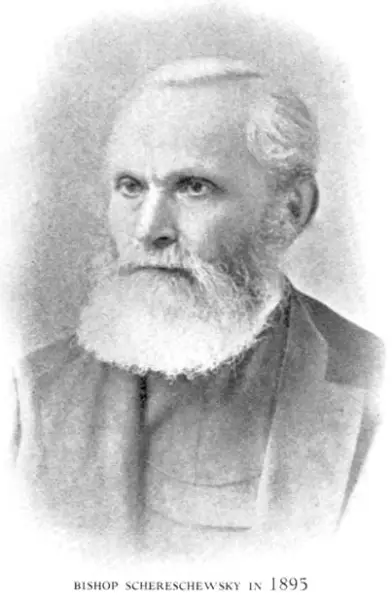
St. Samuel Isaac Joseph Schereschewsky
Rabbinical student turned Bishop of Shanghai and Bible translator
Overview
Samuel Isaac Joseph Schereschewsky was a Lithuanian-born Jewish convert who became the Anglican Bishop of Shanghai and one of the great Bible translators of China. Born in Tauroggen on May 6, 1831, and orphaned young, he was educated with the expectation that he would become a rabbi, but a Hebrew New Testament picked up at the rabbinical school in Zhytomyr gradually convinced him that the Messianic hopes of his people were fulfilled in Jesus. Emigrating to the United States in 1854, he was baptized the following year and prepared for ministry, first among Presbyterians and then in the Episcopal Church. Ordained for China in 1859, he reached Shanghai that December and began a lifetime of translation work: the Psalms into the Shanghai dialect, the Book of Common Prayer into Mandarin, and eventually the whole Bible. Consecrated Bishop of Shanghai in 1877, he founded St. John's University and led the diocese until failing health forced his resignation. His limbs wholly paralyzed and his speech half lost, he passed almost twenty-five years typing out a Mandarin Old Testament and an Easy Wenli Bible with two fingers, completing the labor in Tokyo, where he died on October 15, 1906.
The Complete Life
The Boy Who Was to Be a Rabbi
Samuel Isaac Joseph Schereschewsky was born in Tauroggen, in Russian Lithuania, on May 6, 1831, his name apparently came from his father, and Rosa Salvatha was his mother. Bereft of both parents in childhood, he was evidently brought up by a well-to-do half-brother, a dealer in timber, who gave the promising student the best education available with one goal in view: that he should become a rabbi. From fifteen onward he had to earn his keep as a private tutor and as a glazier. The turning point came at the rabbinical school in Zhytomyr, where there fell into his hands a Hebrew New Testament that a London missionary society had printed for distribution among the Jewish people. His study of it gradually persuaded him that the Messianic promises of the Hebrew Scriptures and the long-cherished hopes of his nation had come to their fulfillment in Jesus. At nineteen he went to Germany, studying at Frankfurt and then for two years at the University of Breslau, adding German to his command of Yiddish, Polish, and Russian; German he went on speaking with native mastery for the remainder of his days. The languages of his boyhood, the Hebrew of his rabbinical training, and the German of his student years were all, unknowingly, being gathered for the work of translation that would fill his life.
§ Early years
From New York Harbor to Ordination
In 1854 Schereschewsky decided to emigrate to the United States and settled in New York City, where he found company among Messianic Jews but did not yet enter the church. In 1855 he was baptized by immersion and joined a Baptist congregation; for unexplained reasons he next attached himself to the Presbyterians and entered the Western Theological Seminary at Allegheny, Pennsylvania, enrolling under the name Samuel Isaac Joseph, it seems, to escape anti-Jewish prejudice. After more than two years he moved again, to the Episcopal Church and the General Theological Seminary in New York, where the chair of Hebrew, Samuel H. Turner, became his mentor. His plan to finish his final two years of study was interrupted by China: he offered himself for missionary work there, and on May 3, 1859, the Foreign Committee resolved to dispatch him to China as a missionary directly upon ordination. On July 17, 1859, he was ordained a deacon at St. George's Church, New York, by Bishop William Jones Boone. The convert from the rabbinical school, who had crossed denominations in search of the church of his new faith, was now bound for the mission field that would claim the rest of his life.
§ Road to China
Bishop of Shanghai and Founder of a University
Schereschewsky arrived in Shanghai on December 21, 1859, aboard the Golden Rule with Bishop Boone, who ordained him to the priesthood the following year in the mission school chapel at Hongkew. From 1862 he served in Peking, including work on the Peking Translation Committee, and by 1861 he had begun the Bible translations into Chinese that would define his life, starting with the Psalms in the Shanghai dialect and continuing with a Mandarin Book of Common Prayer produced with the English missionary John Shaw Burdon. In 1875 failing health sent him back to the United States, and he refused a first call to the bishopric of Shanghai; two years later, assured of financial support for his dream of a college to educate Chinese in Shanghai, he accepted. He was consecrated bishop in Grace Church, New York, on October 31, 1877, and in 1879 founded St. John's College, later St. John's University, beginning with thirty-nine students. A sun stroke in 1881 left him progressively incapacitated, and in 1883 he resigned his see. The bishop's chair he surrendered, but the translator's desk he never abandoned.
§ Career in China
Two Fingers and Twenty-Five Years
After his resignation Schereschewsky withdrew to America on the understanding that the China mission might still use his pen as translator should his strength allow. In 1895 he did exactly that, though he had become paralyzed in every limb and his powers of speech were partly gone. Confined for close to a quarter of a century to one and the same chair, he slowly and painfully struck out with two fingers a Mandarin rendering of the Old Testament and an Easy Wenli covering of all Scripture; the Mandarin New Testament and Hebrew Bible appeared in 1898 and 1899. Not content, he longed to give the Scriptures a completely new rendering in Wenli, the classical literary tongue of China, judging the five previous attempts inaccurate, some even lapsing into paganism. In his final decade he moved to Tokyo, where he continued the work with the help of an amanuensis, first in Chinese and later in Japanese. There he died on October 15, 1906, and there he is buried. A contemporary called him probably the greatest Bible translator China ever had, a verdict won not despite his paralysis but, in the eyes of many, through the heroic patience with which he worked around it.
§ Career in China
A Feast Day on the Episcopal Calendar
Schereschewsky has never been canonized in the Roman sense; he belonged to the Anglican tradition, which commemorates exemplary Christians on its calendars without formal canonization processes. The Episcopal Church in the United States honors him with a feast day on October 14 on its liturgical calendar of saints, a date deliberately chosen to fall on the eve of his death and kept there ever since. The commemoration places the Jewish boy from Tauroggen, the Presbyterian and Baptist seeker, the Episcopal bishop of Shanghai, and the paralyzed translator of Tokyo in the company of the church's recognized witnesses. For a man whose career was marked by institutional transitions and by resignation from his see, the recognition is a quiet vindication: the church remembers him not for the offices he held but for the Scriptures he gave to Chinese readers, in the dialect of Shanghai, in the Mandarin of the north, and in the classical Wenli of the scholars. His life's work, begun in Hebrew at a rabbinical school in Zhytomyr, ended on an Episcopal calendar in America, with China's Bible in between.
§ Veneration
St. John's University and a Chinese Bible
Schereschewsky died on October 15, 1906, and is buried in Tokyo, but his two great foundations outlived him. St. John's University, which he began in 1879 with thirty-nine students, mostly taught in Chinese, became one of the most significant institutions of higher learning in China. In 1891, after his resignation from the bishopric, it changed to teaching in English, and its courses came to focus on science and natural philosophy, educating generations of Chinese leaders before its eventual dissolution in the mid-twentieth century. His translations endured equally: the Psalms in the Shanghai dialect, the Mandarin Book of Common Prayer, the Mandarin New Testament and Hebrew Bible of 1898 and 1899, and the Easy Wenli Bible typed out two fingers at a time gave Chinese Christians the Scriptures in registers from the vernacular to the classical. The Polish surname he carried, Szereszewski in its original form, recalls the Jewish Lithuania of his birth, while the Chinese characters of his name, Shi Yuese, are still associated with the making of the Chinese Bible. Between those two names stands the work of a man who spent one lifetime bridging them.
§ Death and legacy
Timeline
- 6 May 1831
Born in Tauroggen, Russian Lithuania, and orphaned as a young boy.
§ Early years
- 1854
Decided to emigrate to the United States, settling in New York City, where he connected with Messianic Jews.
§ Road to China
- 1855
Baptized by immersion and joined a Baptist congregation before later moving to the Episcopal Church.
§ Road to China
- 3 May 1859
The Foreign Committee resolved that he be sent to China as a missionary directly upon his ordination.
§ Road to China
- 17 Jul 1859
Ordained a deacon at St. George's Church, New York, by Bishop William Jones Boone.
§ Road to China
- 21 Dec 1859
Arrived in Shanghai aboard the ship Golden Rule with Bishop Boone.
§ Career in China
- 28 Oct 1860
Ordained priest by Bishop Boone in the mission chapel that afterward took the name Church of Our Savior at Hongkew.
§ Career in China
- 1861
Began his Bible translations into Chinese, starting with the Psalms in the Shanghai dialect.
§ Career in China
- 1862
Began service in Peking, including work on the Peking Translation Committee.
§ Career in China
- 1875
Returned to the United States for health reasons and refused a first call to become missionary bishop of Shanghai.
§ Career in China
- 31 Oct 1877
Consecrated Bishop of Shanghai in Grace Church, New York, by Benjamin Bosworth Smith.
§ Career in China
- 1879
Founded St. John's College in Shanghai, later renamed St. John's University, beginning with 39 students.
§ Career in China
- 1881
Suffered a sun stroke that left him increasingly incapacitated.
§ Career in China
- 1883
Resigned the bishopric of Shanghai for health reasons.
§ Career in China
- 1895
Went back to China as translator even though his limbs were wholly paralyzed and his speech greatly impaired.
§ Career in China
- 1898
Brought out his Mandarin versions of the New Testament and of the Hebrew Scriptures.
§ Career in China
- 15 Oct 1906
Died in Tokyo, Japan, where he is buried, after a final decade spent translating with an amanuensis.
§ Death and legacy
In Their Own Words
Probably the greatest Bible translator China ever had.
The Record
- Major works
- Translation of the Psalms into the Shanghai dialect·Translation of the Book of Common Prayer into Mandarin, with John Shaw Burdon·Mandarin translations of the New Testament and the Hebrew Bible (1898-1899)·Easy Wenli translation of the whole Bible·Founder of St. John's University, Shanghai
- Canonization
- Not formally canonized; commemorated on the liturgical calendar of the Episcopal Church (USA) on October 14
Prayer
Bibliography
Show 8 sources
- Eber, Irene (1999). The Jewish Bishop and the Chinese Bible: S.I.J. Schereschewsky, (1831-1906). Leiden; Boston: Brill. ISBN 9004112669
- Broomhall, Marshall, ed. (1907), The Chinese Empire: A General and Missionary Survey, London: Morgan and Scott
- Muller, James Arthur. Apostle of China: Samuel Isaac Joseph Schereschewsky (New York: Moorhouse, 1937)
- Green, David B. (15 October 2015). "This day in History 1906: The Anglican bishop of Shanghai dies". haaretz.com
- "Schereschewsky, Samuel Isaac Joseph". Encyclopedia Americana. Vol. XXIV. 1920
- "BISHOP SCHERESCHEWSKY", Project Canterbury, The Bishops of the American Church Mission in China, Hartford, Connecticut: Church Missions Publishing Co., 1906
- Lesser Feasts and Fasts 2018. Church Publishing, Inc. 2019-12-17. ISBN 978-1-64065-235-4
- Clasper, Paul, "Samuel Isaac Joseph Schereschewsky", Biographical Dictionary of Chinese Christianity, reprinted from Gerald H. Anderson, ed., Biographical Dictionary of Christian Missions (Macmillan, 1998)
Profile text adapted from the Wikipedia article, licensed CC BY-SA 4.0.
Pray with this saint every day
Save St. Samuel Isaac Joseph Schereschewsky to your favorites, read the full profile, and get feast-day reminders in the Saints app.
Get the Saints AppFree on the App Store for iPhone and iPad