
285 – 304·Feast October 30
St. Saturninus of Cagliari
Beheaded patron martyr of the Sardinian capital
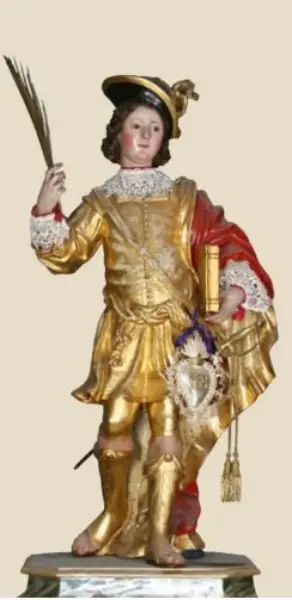
Overview
Saturninus of Cagliari, known in Italian as San Saturnino or Saturno, is honored as the principal patron of the Sardinian capital. Tradition makes him a native of the island, born on 23 May 285, and a martyr of the Great Persecution: on 30 October 304, by order of the governor Barbarus, he was beheaded at Cagliari for refusing to offer sacrifice to Jupiter. His cult is among the oldest of the city, centered on the fifth-century Basilica of San Saturnino, raised over the place where the saint was believed to lie. Scholars have questioned the details of the legend, noting that it took shape centuries after the supposed martyrdom, yet the Sardinian form of his name, Santu Sadurru, has been read as a trace of a genuine early martyr, a young Christian put to death by the pagans and buried where the ancient church later stood. His story has often been tangled with those of other martyrs of the same name, above all Saturninus of Toulouse and the martyrs of the African group remembered at Abitina.
The Complete Life
An Island Christian
Saturninus was born in Sardinia on 23 May in the year 285, in the generation before the last and greatest of the Roman persecutions broke over the Church. The tradition that has reached us records nothing of his family or station; it preserves instead the essentials, an island Christian, young when Diocletian's edicts made profession of the faith a capital matter. The Sardinian form of his name, Santu Sadurru, preserved in the island's own speech, has been taken by scholars as evidence of a real early martyr of that name, a young Christian put to death by the pagans and buried where the ancient church later rose. Whatever the uncertainties surrounding his legend, the memory of a martyr at Cagliari in the age of Diocletian stood behind the earliest devotion of the place, and the basilica that still bears his name grew from that conviction. The dates the tradition gives span only nineteen years, a life contained entirely within the era in which to be a Christian was itself an act of defiance. In him the island's oldest Christianity found one of its clearest witnesses.
§ Introduction
Refusal Before the Governor
The persecution of Diocletian reached Cagliari in the year 304, and Saturninus died in it. The tradition of the city records that he was a local martyr in the strict sense, killed at Cagliari itself, by order of the governor Barbarus. The legend recounts that he was beheaded on 30 October 304 for refusing to offer sacrifices to Jupiter. To refuse the gods of the empire in that year was to accept death without appeal, and the young man went to execution rather than to incense. His death fixed his place in the city's memory: the place of his burial became a site of veneration, and upon it, in the following century, there rose the ancient Basilica of San Saturnino, still among the oldest monuments of Cagliari. His feast is kept on 30 October, the anniversary of his martyrdom, and his patronage of the city has never been disputed. There his body was honored from the earliest times, and the memory of the young man who would not burn incense to Jupiter became part of the city's understanding of holiness.
§ Introduction
Legend, History, and the Basilica
The cult of Saturninus at Cagliari is as old as Sardinian Christianity, but its history is not simple. The ancient basilica of San Saturnino, a fifth-century building of unusual form, was dedicated to the saint from the beginning, and scholars have judged that the legend of his martyrdom was invented long afterward to supply a story for the name inscribed on the ancient church. Close trading ties and constant communication linked Cagliari with North Africa, and it may have been along those routes that the cult of one of the many martyrs bearing the name Saturninus, some of them belonging to the group of the Martyrs of Abitina, or the better-known Saturninus of Toulouse, arrived and settled on the Sardinian shore. Yet the very form of the saint's name in Sardinian argues for a genuine local martyr of that name, truly buried where the church was raised. However the question is settled, the devotion of Cagliari has remained constant, with the saint's statue watching over the basilica that bears his name and his feast kept on 30 October. So the cult has stood, questioned by critics and unshaken in the city that keeps it.
§ Introduction
Timeline
- 23 May 285
Born in Sardinia
§ Introduction
- 30 Oct 304
Beheaded at Cagliari on the order of the governor Barbarus for refusing sacrifice to Jupiter
§ Introduction
The Record
- Patron of
- Cagliari
- Canonization
- Pre-congregation; venerated from antiquity as the martyr-patron of Cagliari
Prayer
Bibliography
Show 3 sources
- "Patron Saints Index: Saint Saturninus of Cagliari" (archived 24 July 2008).
- "San Saturnino di Cagliari".
- Motzo, B. R. Studi sui Bizantini in Sardegna e sull'agiografia sarda. Cagliari: Deputazione di Storia patria per la Sardegna, 1987.
Profile text adapted from the Wikipedia article, licensed CC BY-SA 4.0.
Pray with this saint every day
Save St. Saturninus of Cagliari to your favorites, read the full profile, and get feast-day reminders in the Saints app.
Get the Saints AppFree on the App Store for iPhone and iPad