
1st century (tradition: died c. 47 AD)·Feast May 1 and May 15 (general); each saint also has his own feast
The Seven Apostolic Men
Seven Clerics Traditionally Held to Have Evangelized Spain
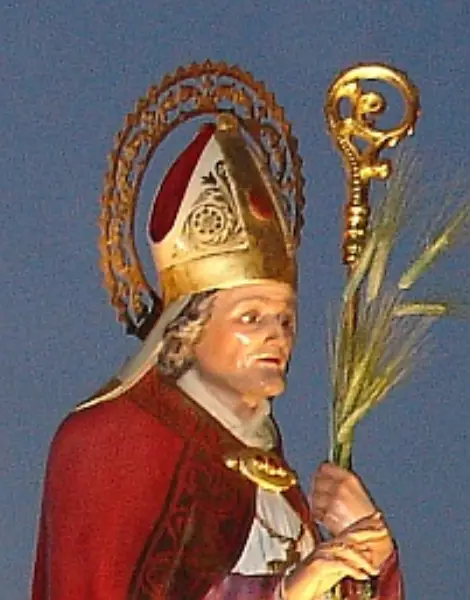
Overview
Spanish tradition names seven clerics — Torquatus and Caecilius, Ctesiphon, Euphrasius, Indaletius, Hesychius, Secundius — who, the legend holds, were ordained by Saints Peter and Paul at Rome and sent to preach in Hispania in the apostolic age, dying there around the year 47. Their story probably arose in the eighth century; it entered the Martyrology of Lyon of 806, drawing on older material, and sounds again in the Mozarabic liturgy. Tenth-century manuscripts, preserving still older matter, tell of their arrival at Acci, modern Guadix, amid festivities for Jupiter, Mercury and Juno: pursued to a river by pagans, they crossed safely when the bridge collapsed behind them, and were hidden by a noblewoman named Luparia, who converted and raised an altar in honour of John the Baptist. The seven then parted through Baetica as tradition's first bishops: Torquatus at Guadix, Caecilius at Elvira by Granada, Euphrasius at Iliturgis, Ctesiphon at Berja, Hesychius at Cazorla, Indaletius at Pechina, and Secundius at Ávila or Abla. Some of their traditions overlap with the legend of Saint James, and the identifications of the sees are debated; only Elvira is held certain. John Paul II saluted them in 1982 as the missionary founders of Spain's faith.
The Complete Life
The Tradition
Spanish tradition gives us seven clerics — Torquatus, Caecilius and Ctesiphon, Euphrasius, Indaletius, Hesychius and Secundius — whom legend describes as ordained at Rome by the apostles Peter and Paul and dispatched to evangelize Hispania in the apostolic era, their deaths coming around the year 47. Whether the seven were imagined as Romans, Greeks or natives of Hispania remains unclear. Their story, as scholarship has it, probably arose in the eighth century; it entered the Martyrology of Lyon of 806, drawing on older material, and sounds again in the Mozarabic liturgy of the Spanish church under Islam. The cult belongs, in other words, to the pre-congregation era: a legendary elaboration, of great age, attached to real early Christian communities of Baetica that needed apostolic roots.
§ Introduction
The Legend of Acci
The fullest account, in tenth-century manuscripts preserving older material of the eighth and ninth centuries, has the seven arriving at Acci — today's Guadix in Andalusia — while festivities in honor of Jupiter, Mercury and Juno were going on. The pagans pursued them toward the river, yet the bridge fell in miraculously at their backs, and they got across unharmed. A noblewoman called Luparia, drawn to what they were about, took them in, was converted herself, and set up an altar to honor John the Baptist. The seven then dispersed through the province as the traditional first bishops of the church of the south: Torquatus at Guadix, Caecilius at Elvira near Granada, Euphrasius at Iliturgis, Ctesiphon at Berja, Hesychius at Cazorla, Indaletius at Pechina, and Secundius at Ávila or Abla. Some of their traditions overlap with the legend of Saint James and the earliest Christian traditions of Spain.
§ Introduction
Cult and Relics
The seven are venerated in the Catholic and Eastern Orthodox churches, with a general feast on 15 May (and on 1 May in some traditions), and individual feasts for each saint in the local calendars of the sees assigned to them. Their relics, real or translated, anchor the cults of the Andalusian dioceses: Torquatus's relics at Celanova were distributed in 1592 to Guadix, Santiago de Compostela, Ourense and El Escorial. The ancient sees whose founding the seven personify — above all Elvira, whose council in the fourth century is a landmark of Spanish church history — drew their apostolic legitimacy from the legend.
§ Torquatus' relics
Legacy
The Seven Apostolic Men belong to the legendary history of Spanish Christianity, and modern historians read them accordingly: as an eighth-century construction giving apostolic pedigree to the churches of Baetica. But the legend itself has been a living force. In 1982 Pope John Paul II, on his first visit to Spain, declared that the missionary zeal of the Seven Apostolic Men had won Spain for the faith — a pope's acknowledgment of the tradition's continuing weight. The seven are patrons of their several Andalusian cities, their statues and churches dot the south, and for the historical question of how Christianity reached Roman Hispania — certainly by the second century, and probably earlier — they remain the traditional, if not the critical, answer.
§ Introduction
Timeline
- 47
Ordained in Rome by Saints Peter and Paul and sent to evangelize Spain, where tradition places their martyrdom about this year
§ Introduction
- 500
The Diocese of Vergi, of which Ctesiphon is honoured as first bishop, is probably founded around this time
§ Ctesiphon
- 700
The legend of the seven apostolic men probably takes shape
§ Introduction
- 700
Torquatus's relics are rediscovered during the Moorish invasion, in a church near the Limia River
§ Torquatus' relics
- 806
The Martyrology of Lyon records the seven, incorporating text from a fifth-century source
§ Introduction
- 900
Torquatus's relics are translated to San Salvador de Celanova in Ourense
§ Torquatus' relics
- 1200
The Dominican writer Rodrigo de Cerrato writes about the seven
§ Introduction
- 1592
Torquatus's sepulchre is opened and relics distributed to Guadix, Compostela, Ourense and El Escorial
§ Torquatus' relics
- 1627
Further relics of Torquatus are sent to Granada
§ Torquatus' relics
- 1982
Pope John Paul II credits Spain's conversion to the missionary zeal of the Seven Apostolic Men
§ Veneration
In Their Own Words
was conquered for the faith by the missionary zeal of the Seven Apostolic Men
The Record
- Patron of
- Berja (St Ctesiphon, with Our Lady of Gádor)
- Symbols
- Seven clerics in Roman dress·Palm of martyrdom·Collapsed bridge of the Acci legend
- Canonization
- Pre-congregation ancient cult; the legend probably took shape in the 8th century and was incorporated into the Martyrology of Lyon (806) from a fifth-century source; venerated in the Catholic and Eastern Orthodox Churches
Bibliography
Show 5 sources
- 1 2 3 4 5 6 7 8 "San Torcuato y los 7 Varones Apostólicos" . Aciprensa. n.d . Retrieved September 5, 2008 .
- 1 2 3 "Ctesiphon von Vergium", Ökumenisches Heiligenlexikon
- ↑ "Los orígenes históricos del cristianismo. Lección XVII: La difusión del cristianismo fuera de Palestina" . Lecciones de la cátedra de Teología . Archimadrid.es. p. Cita como fuente a García Villoslada, Historia Eclesiástica de España, pg
- ↑ "Guil, Escultora / San Pedro y los siete Varones Apostólicos (Catedral de Guadix)" . A-guil.com . Retrieved 2012-09-20 .
- 1 2 3 "San Torquato Vescovo di Guadix" . Santi e Beati. 6 Feb 2003. Archived from the original on 14 February 2021 . Retrieved September 5, 2008 .
Profile text adapted from the Wikipedia article, licensed CC BY-SA 4.0.
Pray with this saint every day
Save The Seven Apostolic Men to your favorites, read the full profile, and get feast-day reminders in the Saints app.
Get the Saints AppFree on the App Store for iPhone and iPad