
c. 1119-1170·Feast December 29
St. Thomas Becket
Archbishop and Martyr
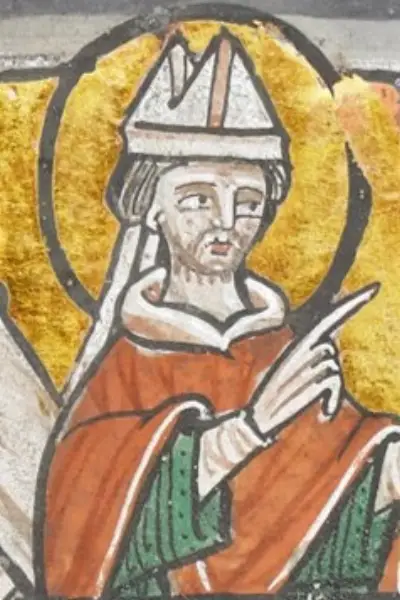
Overview
Thomas Becket was born in Cheapside in London around 1119, on the feast of Thomas the Apostle, the son of Gilbert, a merchant turned property owner of Norman descent, and Matilda. Schooled at Merton Priory and in London, with a year in Paris, he entered the household of Archbishop Theobald of Canterbury, who sent him to study canon law at Bologna and Auxerre and made him Archdeacon of Canterbury in 1154. His efficiency recommended him to King Henry II, who appointed him Lord Chancellor in January 1155; the two men were close, and the king fostered his own son in Becket's home. When Theobald died, Henry secured his chancellor's election as Archbishop of Canterbury in 1162, expecting a compliant friend. Instead Becket resigned the chancellorship, turned ascetic, and defended the Church's jurisdiction. Over the Constitutions of Clarendon in 1164 he refused formal assent to royal claims, was charged at Northampton, and fled into exile in France, sheltering at Pontigny while the king persecuted his supporters. A compromise allowed his return late in 1170, but when he excommunicated bishops who had crowned the young king, Henry's furious words sent four knights to Canterbury. On 29 December 1170 they cut him down in his own cathedral at vespers; a hairshirt was found beneath his vestments. He was canonized within three years, and his shrine drew pilgrims for centuries, until Henry VIII destroyed it in 1538.
The Complete Life
Early Life
Thomas Becket was born in Cheapside in London around 1119, on the feast of Thomas the Apostle, the son of Gilbert, a merchant turned property owner of Norman descent, and Matilda. He was schooled at Merton Priory and in London, with a year in Paris — a middling education for a young man of the mercantile elite who would rise by ability. He entered the household of Archbishop Theobald of Canterbury, who recognized his gifts, sent him to study canon law at Bologna and Auxerre, and made him Archdeacon of Canterbury in 1154.
§ Early life
Chancellor and Archbishop
Becket's efficiency recommended him to King Henry II, who appointed him Lord Chancellor in January 1155. The two men became close friends — the king fostered his own son in Becket's household — and the archdeacon lived the chancellor's part magnificently: household, hunting, war, and diplomacy. When Theobald died, Henry secured his chancellor's election as Archbishop of Canterbury in 1162, expecting a compliant friend in the primatial see. What he got was a transformation that contemporaries found theatrical and modern historians find sincere: Becket resigned the chancellorship, turned ascetic — the hairshirt was found under his vestments after his death — and set himself to defend the Church's jurisdiction against the crown's.
§ Introduction
The Quarrel of Church and Crown
The quarrel came to a head over the Constitutions of Clarendon in 1164, the written statement of the customs regulating criminous clerks and appeals that Henry demanded the bishops recognize. Becket refused formal assent, was charged at the council of Northampton on ruinous secondary matters, and fled into exile in France, sheltering at the Cistercian house of Pontigny while the king persecuted his supporters at home. Six years of negotiation ended in a compromise that allowed his return late in 1170 — but Becket at once excommunicated the bishops who had crowned the young king in his absence, an act that struck at the royal prerogative at its root.
§ Constitutions of Clarendon
Trial and Final Years
On hearing of the excommunications, Henry uttered the words that four of his knights chose to take as instruction. Reginald FitzUrse, Hugh de Morville, William de Tracy and Richard le Bret crossed to Canterbury, and on 29 December 1170 they cut the archbishop down in his own cathedral, at vespers, before the altar — an act of sacrilege so blatant that it united Christendom against the king. Henry did public penance at Becket's tomb in 1174; the martyr's shrine at Canterbury became the greatest pilgrimage site of England, the destination of Chaucer's pilgrims, until Henry VIII destroyed it in 1538 and erased the saint's name from the calendar.
§ Assassination
Canonization
Becket was canonized by Alexander III on 21 February 1173, barely two years after his death — among the fastest canonizations on record, driven by the flood of pilgrims and reported miracles at Canterbury. His feast, 29 December, was kept throughout the Western Church; his cult survived its official destruction in England among recusant Catholics, and Canterbury remained the emblem of the Church's resistance to royal supremacy, invoked by every later generation that faced the same question.
§ Introduction
Legacy
Becket is the type of the martyr for the Church's liberty — a statesman-turned-prelate who died defending jurisdiction rather than doctrine, which made him useful to causes from the Investiture Controversy's aftermath to the Oxford Movement's. The murder in the cathedral has been retold in every medium, most famously in T. S. Eliot's Murder in the Cathedral and Anouilh's Becket; the exasperated 'rid me of this turbulent priest' (in one form or another) is the standing example of power's deniable order. Historians still debate the sincerity of the conversion of 1162; no one disputes that the man who died on 29 December had chosen, against every instinct of his career, the side that lost the argument and won the century.
§ Legacy
Timeline
- 21 Dec 1119
Born at Cheapside in London, on the feast of Thomas the Apostle
§ Early life
- 1154
Made Archdeacon of Canterbury by Archbishop Theobald of Bec
§ Early life
- Jan 1155
Appointed Lord Chancellor of England on Theobald's recommendation to Henry II
§ Early life
- 23 May 1162
A royal council of bishops and noblemen confirms his election to the see of Canterbury
§ Primacy
- 2 Jun 1162
Ordained a priest at Canterbury
§ Primacy
- 3 Jun 1162
Consecrated archbishop by Henry of Blois, Bishop of Winchester
§ Primacy
- Oct 1163
Henry II seeks clerical backing for royal church rights at Westminster Abbey, opening his quarrel with Becket
§ Primacy
- 30 Jan 1164
Henry presides at Clarendon Palace over clergy assenting to the Constitutions of Clarendon; Becket refuses to sign
§ Constitutions of Clarendon
- 8 Oct 1164
Summoned to Northampton Castle on charges of contempt and malfeasance; convicted, he flees to the Continent
§ Constitutions of Clarendon
- 14 Jun 1170
York, London and Salisbury bishops crown Henry the Young King at Westminster, breaching Canterbury's coronation privilege
§ Assassination
- Nov 1170
Excommunicates the three bishops who performed the young king's coronation
§ Assassination
- 29 Dec 1170
Killed by four of Henry's knights inside Canterbury Cathedral during vespers
§ Assassination
- 21 Feb 1173
Canonised by Pope Alexander III at St Peter's Church in Segni
§ After Becket's death
- 12 Jul 1174
Henry II performs public penance at Becket's tomb in Canterbury
§ After Becket's death
- 7 Jul 1220
Bones translated to a jewelled shrine in the new Trinity Chapel on the jubilee of his death
§ Cult in the Middle Ages
- 1538
Henry VIII has the shrine destroyed and the saint's name obliterated during the dissolution of the monasteries
§ Cult in the Middle Ages
In Their Own Words
It is not right to make a fortress out of the house of prayer!
I am no traitor and I am ready to die.
For the Name of Jesus and the protection of the Church I am ready to embrace death.
I am ready to die for my Lord, that in my blood the Church may obtain liberty and peace. But in the name of Almighty God, I forbid you to hurt my people whether clerk or lay.
There has been no satisfaction, and I will not absolve them.
The Record
- Patron of
- Co-patron of the City of London (with St. Paul)·Secular clergy (by long tradition)
- Symbols
- Bishop's vestments·Sword-wound to the head·Pillar of the cathedral
- Canonization
- Canonized by Pope Alexander III on 21 February 1173, little more than two years after his death
Prayer
Bibliography
Show 2 sources
- ↑ The name "Thomas à Becket" is not contemporary but was first used by Thomas Nashe in the 1590s. [ 2 ]
- ↑ There is a legend that claims Thomas's mother was a Saracen princess who met and fell in love with his English father while he was on Crusade or pilgrimage in the Holy Land , followed him home, was baptised and married him. This story has
Profile text adapted from the Wikipedia article, licensed CC BY-SA 4.0.
Pray with this saint every day
Save St. Thomas Becket to your favorites, read the full profile, and get feast-day reminders in the Saints app.
Get the Saints AppFree on the App Store for iPhone and iPad