
died 6th century·Feast July 1
St. Veep
Cornish Parish Saint of St Veep
Overview
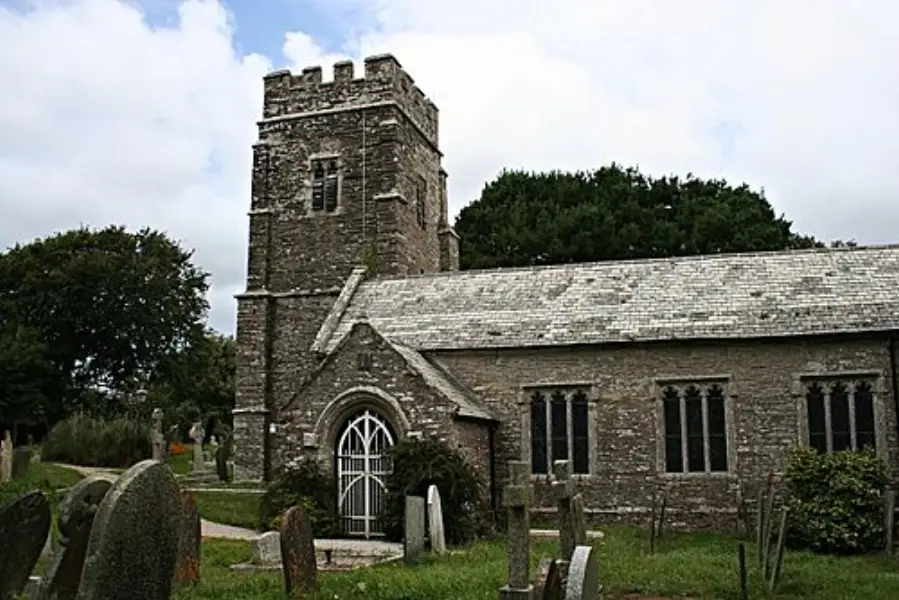
Veep, whose name appears in the records under many spellings and who died in the sixth century, is the Cornish saint from whom the village and parish of St Veep take their name. Almost nothing survives to describe her life, and even the most basic particulars are uncertain: the medieval sources portray the saint now as a man and now as a woman. Scholars read this unusual degree of confusion as a sign that, by the later middle ages, Veep had become largely a place-name rather than the object of an active cult, which may also explain why the dedication of the parish church of St Veep was eventually changed. Welsh records preserve one possible identification: they remember a daughter of King Brychan of Brycheiniog called Wennap, also written Wennapa or Gwennap, or else Weneu, who may be the same figure that Cornwall honors as Veep. Her feast day is kept on 1 July. Whatever the truth of her origins, the saint endures in the landscape and worship of one Cornish parish, whose church originally bore her dedication and whose name carries her memory into the present.
The Complete Life
A Saint Known Only by Name
The figure remembered as Veep belongs to the earliest Christian generations of Cornwall, a woman, or perhaps a man, who died in the sixth century and whose earthly story has otherwise vanished. The genealogical traditions of Wales offer the one hint of a family: they list among the many children of King Brychan of Brycheiniog a daughter called Wennap, recorded also as Wennapa and Gwennap, and in some lines as Weneu. Scholars have proposed that this Welsh princess and the Cornish patron of St Veep may be one and the same person, though the identification remains conjecture rather than certainty. More striking still is the confusion that surrounds the saint's very identity. In the written records Veep appears inconsistently as male and as female, and one modern historian has observed that this unusual degree of uncertainty suggests the name had become, by the later middle ages, largely that of a place rather than that of a saint with a living cult. For the earliest Celtic Christians, whose lives were seldom written down at the time they lived, such an eclipse of the person behind the name was a common fate; Veep's story is thus the story of a memory that outlived its own details.
§ Introduction
The Saint Who Became a Place
Whatever else time took from Veep, it left her name fixed upon the map. The village and parish of St Veep in Cornwall derive their name directly from the saint, a rare and enduring form of honor that has outlasted every other trace of her cult. The parish church was originally dedicated to her, standing at the center of the community that bore her name; in the course of the later middle ages, however, that dedication was changed, and the shift has been connected with the same process by which Veep faded from a remembered saint into little more than the name of a place. When a saint ceases to be the object of an active devotion, the reasoning runs, a parish has less reason to guard an ancient dedication, and the names of newer patrons may displace the old. Yet the feast survives: Veep is commemorated on 1 July, a date kept for a saint of whom no act, no saying, and no certain biography remains. Her case reminds historians of the Celtic Church how much of its early holiness perished with the communities that cherished it, and how place-names can preserve what libraries have lost.
§ Introduction
The Record
- Canonization
- Pre-congregation; an ancient local cult in Cornwall
Prayer
Bibliography
Show 1 sources
- Orme, Nicholas (1996). English Church Dedications: with a Survey of Cornwall and Devon, pg. 122; retrieved 16 April 2012.
Profile text adapted from the Wikipedia article, licensed CC BY-SA 4.0.
Pray with this saint every day
Save St. Veep to your favorites, read the full profile, and get feast-day reminders in the Saints app.
Get the Saints AppFree on the App Store for iPhone and iPad